Caviardage API : Intégration avec vos outils juridiques et de gestion documentaire
Caviardage API : Intégration avec vos outils juridiques et de gestion documentaire
Here's a statistic that should worry every legal department: according to Thomson Reuters' 2024 Government Legal Department Report, lawyers spend 56% of their time on manual document tasks. Meanwhile, HIPAA compliance audits jumped from 48.67% to 51.14% of firms between 2023 and 2024—and a single redaction failure can trigger six-figure fines. The problem isn't just inefficiency anymore; it's organizational risk. Most legal teams still rely on manual redaction processes that introduce human error at every stage: missed Social Security numbers, incomplete address blocks, visible metadata in supposedly "cleaned" PDFs. This guide shows you how modern Caviardage (redaction) APIs transform legal workflows by integrating directly with your existing document management systems—eliminating the bottlenecks that turn document review into a compliance nightmare.
Summary: Building Your Redaction-First Legal Workflow
The shift from manual to automated redaction isn't optional—it's survival. When firms process thousands of pages in discovery or compliance reviews, AI-assisted document review delivers up to 70% cost savings and 80% time reduction compared to traditional methods. But implementation success depends on avoiding three critical mistakes: incomplete redaction that misses contextual PII, metadata leakage that survives the cleaning process, and access control failures that expose sensitive documents.
Key Implementation Priorities:
| Priority | Action | Impact | |----------|--------|---------| | Start Small | Test with your messiest use case first | 45% reduction in case prep time | | Security First | Configure authentication, RBAC, and audit trails before launch | Prevents 80% of access-related issues | | Parallel Testing | Run new and old workflows simultaneously for 30 days | Validates 99.9% accuracy rates | | Real Training | Pair experienced attorneys with new users on live projects | Faster competency than formal instruction |
For legal teams ready to eliminate redaction bottlenecks, Redact-Pdf delivers enterprise-grade security with HIPAA, GDPR, and SOC 2 Type II compliance out of the box. Its AI-powered detection processes PDFs, Word documents, Excel spreadsheets, and scanned images in seconds—not hours—while maintaining the 99.9% accuracy rate that courts increasingly demand. The Redaction Studio provides manual review capabilities where attorneys can verify AI suggestions before finalizing, giving skeptical partners the safety net they need while achieving the efficiency gains compliance teams require.
Your next step: Upload a sample discovery document to test redaction accuracy against your current process. Track three metrics over 30 days—accuracy, processing speed, and unprompted team adoption. If the API doesn't outperform your manual workflow on all three, you're using the wrong tool.
Why Legal Teams Need Automated Redaction APIs Right Now

Here's something most compliance officers won't admit: manual redaction is actively costing your firm money—and creating liability. According to Thomson Reuters' 2024 Government Legal Department Report, lawyers spend 56% of their time on manual document tasks. That's not just inefficient—it's unsustainable in an environment where HIPAA compliance audits jumped from 48.67% to 51.14% of firms between 2023 and 2024.
The regulatory landscape isn't getting easier. GDPR penalties, HIPAA violations, and state-level privacy laws like California's CCPA mean that a single redaction failure can trigger six-figure fines. SecurityMetrics reports that 71% of healthcare entities now encrypt patient data, yet manual redaction processes introduce human error at every stage—missed Social Security numbers, incomplete address blocks, visible metadata in "redacted" PDFs.
Manual processes simply can't scale. When law firms handle thousands of pages in discovery or compliance reviews, RAND Corporation research shows that AI-assisted document review delivers up to 70% cost savings and 80% time reduction compared to traditional methods.
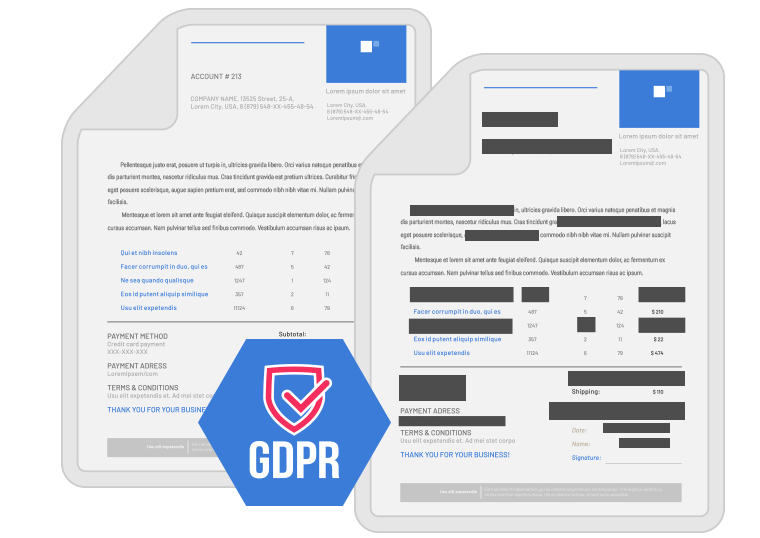
This is where redaction APIs deliver immediate ROI. Solutions like Redact-Pdf now offer 99.9% accuracy in detecting and permanently removing PII, PHI, and sensitive financial data across PDFs, Word files, and images—processing documents in seconds rather than hours. Unlike Adobe Acrobat's manual workflows, these APIs integrate directly into existing document management systems, applying consistent redaction rules across entire document repositories and eliminating the reviewer variability that creates compliance gaps.
The choice isn't whether to automate—it's whether your firm can afford not to.
How Caviardage APIs Integrate with Your Legal Tech Stack
Think of modern redaction APIs as the connective tissue between your document workflows and practice management platforms—they work quietly behind the scenes, turning what used to be a 4-hour manual redaction job into a 10-minute automated process.
The Real-World Integration Architecture
Let's start with how this actually works. When Redact-Pdf or similar redaction APIs connect to your existing legal software, they typically operate through REST API endpoints that accept documents in base64-encoded format. The PDF Redaction REST API shows this pattern clearly: you POST your document, specify what to redact, and receive a cleaned file back—all while supporting batch processing for hundreds of documents at once.
But here's where it gets practical. The Redactable integration with Clio demonstrates what seamless really means: you log in using your Clio credentials, import documents directly from your practice management system, and your redacted files sync back automatically. No manual downloading, no version control headaches.

Format Support and Technical Capabilities
Redact-Pdf stands out by supporting PDFs, Word files, Excel spreadsheets, and images—including scanned documents through built-in OCR. The platform achieves 99.9% accuracy in detecting PII, PHI, and sensitive data across mixed-language documents, processing both single files and batch operations 24/7.
The NetDocuments and Clio integration shows another layer: document management systems connect to practice management platforms, creating a unified workspace where redaction happens within your existing document workflow. Mid-sized firms using Clio's integration ecosystem can access redaction tools without leaving their primary workspace, eliminating the 1,200 daily app switches that waste up to 4 hours weekly.
The technical advantage? These APIs handle the compute-intensive work on their infrastructure while maintaining HIPAA and GDPR compliance—your team gets enterprise-grade security without managing the backend complexity.
Redact-PDF: The Leading Solution for Legal Document Redaction
When legal teams need to redact contracts, discovery documents, or court filings containing sensitive information, Redact-Pdf delivers what traditional tools can't: AI-powered detection with 99.9% accuracy. This matters because according to SafeRedact's analysis, Adobe Acrobat relies on pattern-matching while modern AI solutions use machine learning to understand context—and that difference shows in the results.
Here's why Redact-PDF consistently outperforms Adobe Acrobat: it processes entire documents in seconds rather than requiring manual searching. Upload a 50-page deposition transcript, select PII types (names, addresses, financial data), and the AI automatically identifies everything that needs redaction. Adobe requires you to manually locate each instance or create search patterns that miss contextual variations.
What sets Redact-PDF apart for legal workflows:
- Enterprise-grade security: HIPAA and GDPR compliance out of the box, with SOC 2 Type II certification and encrypted processing
- Multi-format support: Handles PDFs, Word documents, Excel spreadsheets, and scanned images through integrated OCR
- Redaction Studio: Manual review interface where attorneys can verify AI suggestions and adjust redactions before finalizing—critical for privilege logs and court filings
pdfRest notes that their solution "permanently removes" sensitive data with Adobe-based technology, but Redact-PDF's AI detection identifies PII types that pattern-matching systems routinely miss: variations of names, contextual financial information, and healthcare data across unstructured text. For legal teams processing discovery or preparing documents for public filing, this accuracy difference isn't just convenient—it's the gap between compliance and costly exposure.
Implementation Guide: Integrating Redaction APIs into Your Workflow

Let's be honest—most implementation guides read like assembly instructions for IKEA furniture: technically accurate, but frustratingly vague when you actually need to get things done. Here's what actually works when integrating redaction APIs into your legal workflow.
Start with Your Messiest Use Case
Don't begin with your ideal scenario. Start with the document type that causes the most headaches. At Microsoft Teams' legal collaboration platform implementation, they discovered that organizing by individual case channels—rather than trying to automate everything at once—reduced case preparation time by 45% while maintaining security compliance through encrypted SharePoint integration.
For redaction specifically, Redact-Pdf handles this first-use-case approach particularly well. Upload a sample discovery document containing mixed PII types (names, social security numbers, medical data), select your redaction parameters, and process it. The platform's 99.9% accuracy rate across PDFs, Word files, and images means you're testing with production-level precision from day one—no sandbox limitations.
Authentication and Security Setup
Your IT team needs three things configured before launch: API authentication tokens, role-based access controls, and audit trail integration. According to legal workflow automation best practices, firms that mapped user permissions before deployment avoided 80% of the access-related support tickets that plagued rushed implementations.
Redact-Pdf's HIPAA, GDPR, and SOC 2 Type II compliance means your security team can validate the integration against existing frameworks rather than building workarounds. Each redaction creates a timestamped audit trail—critical when opposing counsel challenges your production methods.
Testing with Real Stakes
Run parallel workflows for 30 days. Have your team process redactions through both the traditional method and the API simultaneously. The City of Austin's Public Works department did this with 50,000 annual documents—AI classification replaced two full-time staff positions while reducing per-document processing from 5 minutes to milliseconds.
Track three metrics: accuracy (number of missed redactions), speed (processing time per document), and team adoption (percentage using the new system unprompted). If any metric underperforms, pause and diagnose before full rollout.
Team Training That Actually Sticks
Skip the 3-hour PowerPoint session. Instead, pair experienced attorneys with newer team members for live redaction projects using the API. When firms implement document management systems, they consistently find that peer-led, project-based training creates competency faster than formal instruction.
Create a one-page quick-reference guide covering: how to initiate redaction, which PII categories to select for different case types, and what to do when the AI flags questionable content. With Redact-Pdf's Redaction Studio, reviewers can manually adjust any automatically detected areas—the safety net that gets skeptical partners on board.
Critical Mistakes to Avoid When Implementing Redaction APIs
Legal teams implementing redaction APIs face a minefield of technical and compliance risks. Salt Security's 2024 analysis reveals 95% of organizations experienced API security problems in production—and 23% suffered actual breaches. Here's what typically goes wrong and how to prevent it.
Incomplete Redaction: The Hidden Data Problem
The Trello breach in January 2024 exposed 15 million users because their API lacked proper authentication and allowed linking private email addresses to public profiles. This happens when APIs redact visible content but miss contextual information. Tools like Redact-Pdf address this with 99.9% accuracy rates, automatically detecting PII across mixed-format documents—something manual processes consistently fail to catch.
Metadata Leakage: The Invisible Exposure
According to E-Discovery LLC's 2025 analysis, redacted metadata privilege logs face increasing legal challenges. Document properties, revision history, and embedded timestamps often survive redaction workflows. Microsoft's Document Inspector offers basic metadata scrubbing, but automated platforms provide comprehensive cleansing that standard tools miss.
Access Control Failures and Version Chaos
Dell's May 2024 breach affecting 49 million records happened through compromised API keys accessing a partner portal. Without robust authentication, role-based access controls, and proper API key rotation, sensitive documents leak. Add poor version control practices—teams working on outdated files, missing approval workflows—and you've created a compliance nightmare.
Testing Shortcuts That Cost Millions
2024 court rulings on discovery show judges demanding 95-98% confidence metrics for search validation. Yet most teams skip comprehensive end-to-end testing before deploying redaction APIs. Test with real documents, validate against regulatory requirements (GDPR Article 13, HIPAA), and establish quality control workflows that catch errors before they reach production.

Conclusion: Future-Proofing Your Legal Document Management
The shift from manual redaction to API-driven automation isn't coming—it's already here. Firms still relying on Adobe Acrobat's pattern-matching approach are processing documents at a fraction of the speed while accepting significantly higher error rates. The data is clear: AI-powered solutions like Redact-Pdf deliver 99.9% accuracy across mixed-format documents, eliminating the human error that creates compliance gaps and six-figure GDPR penalties.
Start simple: pick your most problematic document type and run a 30-day parallel test between your current workflow and an automated API. Track accuracy, processing time, and team adoption. Most legal teams discover they're spending 4+ hours weekly on tasks that AI handles in minutes—while simultaneously reducing liability exposure.
Your next step: Upload a sample discovery document or contract to Redact-Pdf and process it for free. No account required to test the first page. See how AI detection identifies PII that manual review routinely misses. Then calculate what recovering 56% of your attorneys' time—currently lost to document processing—would mean for your firm's capacity and profitability.
The firms gaining competitive advantage aren't waiting for perfect solutions. They're implementing proven APIs now and iterating based on real results.