Analysis: The Role of Blockchain in Enhancing Document Redaction Security in 2025
Analysis: The Role of Blockchain in Enhancing Document Redaction Security in 2025
Picture this: A major tech company accidentally exposes competitor secrets in court documents because someone simply placed black boxes over sensitive text—boxes that could be removed with a single click. This isn't a hypothetical nightmare; it's exactly what happened to Meta, triggering massive legal fallout and billions in potential damages. Welcome to the document redaction crisis of 2025, where traditional security methods are spectacularly failing just as data breaches hit record highs.
Here's the wake-up call: 2025's largest data breaches compromised millions of Social Security numbers, government IDs, and financial records—not through sophisticated cyberattacks, but through weak security protocols and basic credential compromises that legacy redaction workflows can't address. The old approach of manually blacking out sensitive information is like using a paper shredder in the digital age—fundamentally inadequate for the volume and complexity of today's document management challenges.
Enter blockchain technology, the game-changing solution transforming how organizations protect sensitive information. By creating immutable audit trails and cryptographic verification systems, blockchain is revolutionizing document redaction from a vulnerable manual process into an enterprise-grade security framework. In this analysis, we'll explore how blockchain's distributed ledger technology is solving the document redaction crisis, examining real-world implementations across healthcare, finance, and government sectors, and revealing why leading organizations are achieving 60% faster compliance reviews while dramatically reducing fraud. The future of document security isn't just digital—it's blockchain-powered.
Understanding Document Redaction Security: Current Challenges and Vulnerabilities
Document redaction sits at a dangerous crossroads in 2025. While regulations like HIPAA, GDPR, and FOIA demand permanent removal of sensitive information before documents can be shared, traditional methods are failing spectacularly. We're not just talking about minor slip-ups—these are catastrophic breaches exposing everything from Social Security numbers to corporate secrets.
The stakes couldn't be higher. According to recent analysis, 2025's largest data breaches compromised highly sensitive PII including SSNs, government-issued IDs, income levels, and credit status across millions of records. The culprits? Weak third-party vendor security and basic credential compromises that traditional redaction workflows simply can't address.
Common Vulnerabilities Plaguing Redaction Today:
- Metadata leaks that expose hidden document history and tracking information
- Improper redaction techniques like simple black boxes over text that can be removed
- Third-party vendor risks where contractors lack adequate security protocols
- Manual process failures when handling large document volumes

Perhaps the most striking example? Meta's recent redaction failure exposed competitor secrets in court documents, triggering massive legal fallout and eroding trust across the tech industry. This wasn't a sophisticated cyberattack—it was a fundamental breakdown in redaction methodology that any organization could experience.
The reality is sobering: traditional methods like blacking out text are woefully inefficient for modern document volumes. When you're managing thousands of files containing protected information, manual redaction becomes not just impractical but dangerously unreliable. Every unredacted Social Security number or medical record represents potential identity theft, regulatory fines, and irreparable reputation damage.
How Blockchain Technology Transforms Document Redaction Security
Think of traditional document redaction like using permanent marker—it looks secure until someone holds it up to the light. Blockchain technology is revolutionizing this process by creating an unchangeable digital paper trail that makes tampering virtually impossible.
At its core, blockchain creates immutable audit trails that log every action taken on a document. When you redact sensitive information, blockchain records who made the change, when it happened, and what was modified—all in a way that cannot be altered retroactively. This eliminates the nightmare scenario where someone claims a document was improperly redacted after the fact.

The magic happens through cryptographic hashing—essentially creating a unique digital fingerprint for each document version. According to EveryCRED's implementation, this process creates "unforgeable, instantly verifiable records" that replace vulnerable centralized systems. When someone attempts to verify a redacted document, the blockchain instantly confirms its authenticity without revealing the redacted content.
Decentralized verification adds another security layer. Rather than trusting a single authority, blockchain-based systems use distributed networks where multiple nodes validate each transaction. This means no single person or system can manipulate redaction records—a game-changer for industries handling sensitive legal, medical, or financial documents.
The result? Organizations achieve audit readiness with tamper-proof logs accessible at any time, transforming compliance from a headache into an automated advantage.
Real-World Applications: Blockchain-Powered Document Redaction in 2025
The theoretical promise of blockchain for secure document redaction is now transforming into tangible solutions across critical sectors. Organizations worldwide are discovering that blockchain's immutable audit trails and cryptographic verification create unprecedented accountability for sensitive information handling.
Healthcare's Breakthrough Moment
The healthcare sector leads blockchain adoption for document security. According to Blockchain for digital healthcare: Case studies and adoption challenges, hospitals are implementing blockchain for health data sharing, ensuring that redacted patient records maintain verifiable chains of custody. When medical professionals redact personal identifiers from research data, blockchain timestamps every modification, creating an indelible record of who accessed what information and when.

Major health systems now use blockchain technology for securing patient data while maintaining compliance with HIPAA regulations. Each redaction event—from concealing patient names in clinical trials to anonymizing insurance claims—gets recorded on distributed ledgers that regulators can audit without compromising the redacted content itself.
Financial Services Under Regulatory Spotlight
The financial sector faces stringent oversight, making blockchain-backed redaction particularly valuable. The New York Department of Financial Services extended blockchain tracing guidance to banks in September 2025, recognizing blockchain analytics as essential for compliance frameworks. Banks are increasingly integrating blockchain-based financial services to enhance security when handling sensitive customer documents.

When redacting loan applications or investigation reports, financial institutions now leverage blockchain's transparency to prove regulatory compliance while protecting customer privacy—a balance previously difficult to achieve.
Enterprise Document Management Evolution
Beyond regulated industries, 65% of organizations are exploring blockchain for document provenance and auditing. Legal firms use blockchain to verify that court filings contain properly redacted privileged information, while government agencies track redactions in freedom-of-information requests with unprecedented precision.
Creating Tamper-Proof Audit Trails: The Blockchain Advantage
Think of traditional document audit trails like pencil marks in a ledger – easy to erase and rewrite. Blockchain technology transforms this paradigm by creating permanent, unchangeable records of every interaction with redacted documents. Once information is logged on the blockchain, it's there forever, creating what experts call an "immutable digital ledger."
Here's what makes blockchain audit trails revolutionary for document redaction:
Timestamped Precision: Every access, modification, or verification event receives a cryptographically secured timestamp that cannot be backdated or manipulated. When someone views a redacted government contract at 2:47 PM on Tuesday, that exact moment is permanently recorded and verifiable.
Complete Transparency: The decentralized nature of blockchain means no single entity can alter the audit trail. Every change creates a new block in the chain, linked to previous entries, making unauthorized modifications immediately detectable.
Real-World Impact: Singapore's financial authority has already implemented blockchain-based audit frameworks for AI governance, demonstrating how this technology ensures accountability in high-stakes environments.

For compliance officers and legal teams, this means instant audit-readiness. According to research on blockchain's impact on auditing, the technology provides "irreversible and verifiable" data recording methods that dramatically reduce fraud risk while enhancing financial transparency. The result? Organizations can prove exactly who accessed sensitive documents, when, and what changes were made – creating an unbreakable chain of accountability that traditional systems simply can't match.
Implementation Guide: Integrating Blockchain for Secure Document Redaction
Ready to transform your document redaction process with blockchain? Let's break down the implementation journey into manageable steps that organizations of any size can follow.
Choosing Your Blockchain Architecture
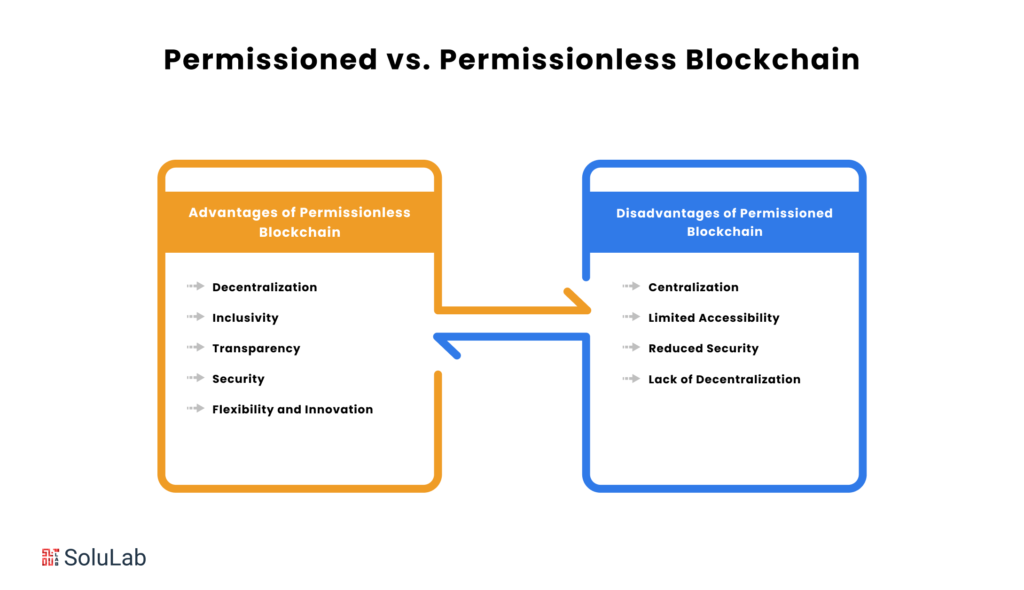
The first critical decision is selecting between permissioned and permissionless networks. Permissioned blockchains are typically faster due to centralized administration and fewer nodes—ideal for organizations handling sensitive documents requiring quick processing times. Think of permissioned networks like a private club where only vetted members can participate, while permissionless networks are like public parks where anyone can enter.
For document redaction specifically, most enterprises prefer permissioned architectures because they offer controlled access and faster transaction speeds. Performance analysis shows that permissioned platforms like Hyperledger deliver superior speed and efficiency for enterprise document management applications.
Step-by-Step Implementation Process
Start by assessing your organization's readiness for blockchain integration. This includes evaluating your current document management infrastructure, security requirements, and compliance obligations.
Next, design your blockchain network architecture from scratch, including consensus mechanisms tailored to document verification workflows. Implementing scalable architecture strategies ensures your system can handle growing document volumes while maintaining robust security measures.
Key infrastructure requirements include:
- Secure node infrastructure for transaction validation
- Integration APIs for existing document management systems
- Cryptographic key management systems
- Audit trail monitoring tools
The complete blockchain implementation roadmap typically spans 6-12 months, depending on organizational complexity and integration requirements.
Advanced Solutions: AI-Powered Redaction with Blockchain Security
The convergence of artificial intelligence and blockchain technology is revolutionizing how organizations protect sensitive information. While traditional redaction relied on manual review—with error rates alarmingly high in manual data entry—modern platforms now combine machine learning with distributed ledger verification to deliver enterprise-grade security at scale.
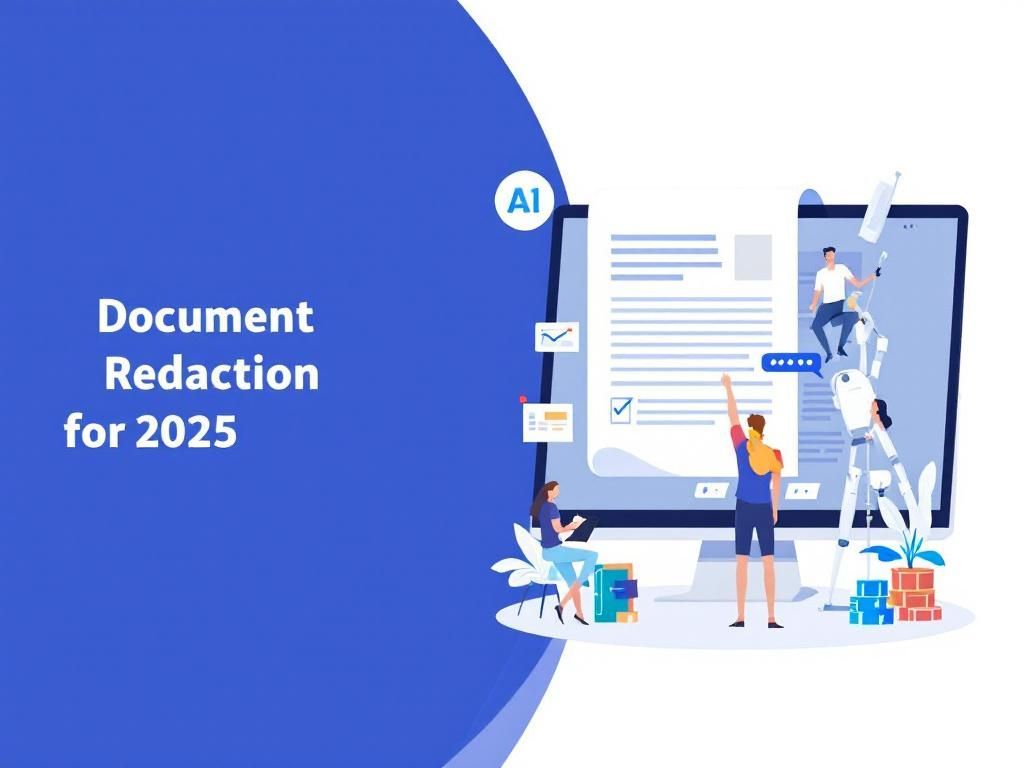
Leading solutions like Redact-PDF.ai exemplify this synergy, using machine learning algorithms to automatically detect and permanently remove sensitive information across multiple pages simultaneously. The platform addresses critical vulnerabilities by ensuring GDPR and HIPAA compliance through encrypted uploads and automatic file deletion post-processing—eliminating the human error that plagued legacy tools.
What makes these advanced platforms stand out is their ability to create immutable audit trails. According to research on blockchain-AI integration, combining AI compliance management with blockchain verification enables organizations to prove exactly when, how, and by whom documents were redacted—crucial for regulatory audits and legal discovery.
The impact is measurable: government agencies implementing AI-powered document processing have achieved 70% reductions in processing time while maintaining higher security standards. For organizations handling high-volume sensitive documents, this isn't just efficiency—it's the difference between vulnerability and compliance confidence in an increasingly regulated digital landscape.
Benefits and ROI: Why Organizations Are Adopting Blockchain for Document Security
Organizations implementing blockchain for document redaction are witnessing measurable returns that extend far beyond basic security upgrades. The global blockchain security market is projected to explode from $20 billion in 2024 to $250 billion within five years, signaling unprecedented confidence in the technology's value proposition.
The financial incentives are compelling. Blockchain technology reduces or eliminates intermediaries, leading to lower costs for consumers and businesses, which directly enhances profitability. For document security specifically, organizations report dramatic reductions in audit costs—streamlined verification processes eliminate redundant manual checks, while immutable audit trails accelerate compliance reviews by up to 60%.
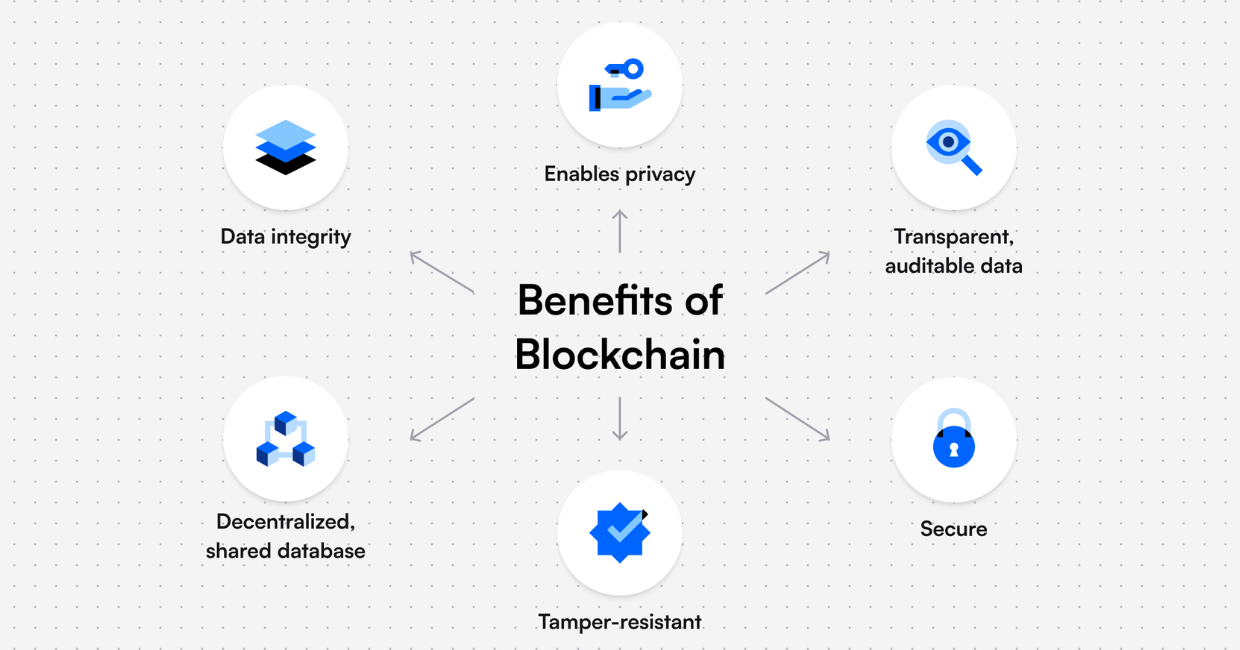
Fraud reduction represents another powerful ROI driver. According to industry research on compliance risks, 72% of financial regulators cite anti-money laundering non-compliance as their top concern—a challenge blockchain's transparent, tamper-proof architecture directly addresses. Organizations leveraging blockchain for document management report measurably fewer unauthorized alterations and data breaches.
Perhaps most valuable is the trust dividend. Blockchain technology revolutionizes regulatory compliance by introducing transparency, efficiency, and automation, creating verifiable documentation trails that satisfy both regulators and stakeholders. This enhanced credibility translates into stronger business relationships, faster contract negotiations, and reduced liability exposure—benefits that compound over time and justify the initial investment in blockchain infrastructure.
Overcoming Implementation Challenges: Practical Tips and Best Practices
Implementing blockchain for document redaction isn't a plug-and-play solution. Organizations face real hurdles, but early adopters have paved the way with proven strategies.
Tackling Scalability Concerns
According to A Survey of Blockchain Applicability, Challenges, and Key Threats, scalability and integration complexity remain primary obstacles. The solution? Start with hybrid architectures. Enterprise Blockchain Adoption in 2025 recommends organizations balance privacy with interoperability by leveraging mature frameworks like Fabric-X and Quorum, which integrate seamlessly with core IT systems while maintaining enterprise-grade performance.

Managing Integration Complexity
Don't try to overhaul everything at once. Successful implementations focus on cross-chain communication tools like Avalanche Warp Messaging and automated smart contract security auditing with AI integration, as noted in Enterprise Blockchain Adoption research.
Navigating Regulatory Uncertainty
Blockchain Compliance Audits & Regulatory Fines 2025 emphasizes proactive compliance programs. Organizations conducting regular security audits report enhanced stakeholder trust and better risk management. As The 2025 Enterprise Blockchain Solutions & Strategy confirms through case studies, investing in comprehensive compliance frameworks positions you ahead of evolving regulations rather than scrambling to catch up.
The key lesson? Start small, audit frequently, and build your infrastructure incrementally rather than attempting a complete transformation overnight.
The Future of Blockchain in Document Security: Trends to Watch in 2025 and Beyond
The blockchain landscape is evolving rapidly, and several game-changing trends are poised to revolutionize document security. According to Blockchain Development in 2025: Trends, Tools & Technologies, AI-driven smart contracts will automate complex processes, optimize workflows, and enhance decision-making in document management systems.
Smart Contracts: The Automation Revolution
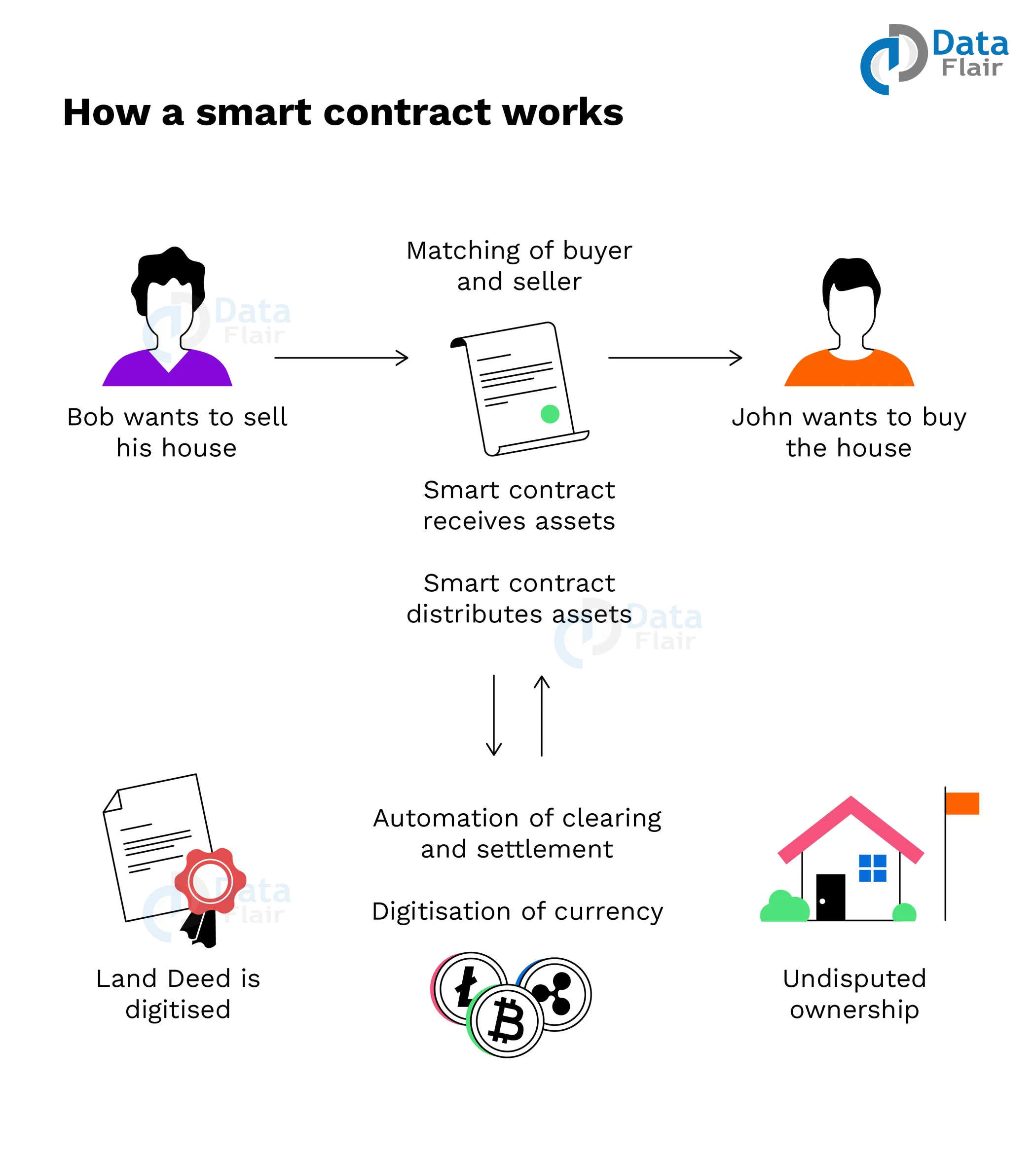
Smart Contracts in Enterprise: Top 7 Business Use Cases in 2025 reveals that enterprises are leveraging smart contracts to boost efficiency, security, and trust in their operations. Real-world results are impressive—10 Smart Contract Case Studies Boosting Entrepreneurial Efficiency reports that companies implementing smart contract automation have achieved a 45.6% reduction in record management time and cut administrative costs by up to 40%.
Cross-Chain Interoperability Takes Center Stage
How Will Cross-Chain Interoperability Shape Blockchain in 2025? emphasizes that the ability for different blockchains to communicate seamlessly will transform document security into a connected, practical, and scalable system. This means your redacted documents can move securely across multiple blockchain networks without compromising their integrity.

Quantum-Resistant Cryptography: Future-Proofing Security
As quantum computing advances, Quantum-Resistant Blockchain: Ensuring Future Security highlights that blockchain networks must adopt quantum-resistant cryptographic algorithms to protect sensitive data and maintain system integrity. This proactive approach ensures your redacted documents remain secure even against future technological threats.
Conclusion: Taking Action on Blockchain-Enhanced Document Security
The convergence of blockchain technology and document redaction represents more than a technical upgrade—it's a fundamental shift in how organizations protect sensitive information. Throughout 2025, we've witnessed traditional redaction methods fail catastrophically, exposing everything from Social Security numbers to corporate secrets. Meanwhile, early adopters of blockchain-backed solutions are achieving 70% reductions in processing time while maintaining ironclad security.
The path forward is clear. Organizations can no longer afford the vulnerabilities of manual redaction or centralized audit systems. Blockchain's immutable ledgers, cryptographic verification, and decentralized architecture deliver the accountability that regulators demand and stakeholders expect. Whether you're handling HIPAA-protected medical records or GDPR-governed customer data, blockchain provides the tamper-proof documentation trail that transforms compliance from a burden into a competitive advantage.
Ready to eliminate redaction vulnerabilities? Start with these immediate actions:
- Assess your current document security infrastructure for blockchain readiness
- Pilot blockchain integration on high-risk document workflows first
- Partner with proven platforms like Redact-PDF.ai that combine AI-powered redaction with enterprise-grade security
| Feature | Traditional Redaction | Blockchain-Enhanced Redaction | |---------|----------------------|-------------------------------| | Audit Trail | Mutable, centralized logs easily altered | Immutable, distributed ledger with cryptographic verification | | Processing Speed | Manual review, high error rates | AI-powered automation with 70% faster processing | | Compliance Proof | Difficult to verify, vulnerable to disputes | Instant verification with timestamped, unchangeable records | | Security | Single point of failure, vulnerable to insider threats | Decentralized architecture resistant to tampering | | Cost | High ongoing audit and compliance expenses | Reduced costs through automation and streamlined workflows |
Frequently Asked Questions:
Q: How much does blockchain implementation cost for document redaction? A: Initial investments vary by organization size, but research shows that eliminating intermediaries and streamlining compliance reduces long-term costs by 40-60%. Most enterprises see ROI within 12-18 months.
Q: Will blockchain work with our existing document management system? A: Yes. Modern blockchain solutions integrate through APIs with platforms like SharePoint and DocuSign. Hybrid architectures allow gradual implementation without disrupting current workflows.
Q: Is blockchain secure against quantum computing threats? A: Forward-thinking organizations are already implementing quantum-resistant cryptographic algorithms to future-proof their blockchain infrastructure against emerging threats.
The question isn't whether to adopt blockchain for document security—it's how quickly you can implement it before your organization becomes the next cautionary tale in redaction failure headlines.