How AI-Powered Redaction Enhances Data Privacy in Healthcare Documents in 2025
How AI-Powered Redaction Enhances Data Privacy in Healthcare Documents in 2025
Picture this: A hospital privacy officer discovers that patient records accidentally shared with researchers contained unredacted Social Security numbers—exposing 10,000 patients to identity theft. The breach investigation reveals a simple truth: a staff member, after eight hours of manual redaction, simply missed the sensitive data buried on page 247. This scenario plays out more often than you'd think, and it's exactly why healthcare organizations are turning to AI-powered redaction technology.
In 2025, healthcare data breaches have reached unprecedented levels, with over 29 million individuals affected in just the first six months. The human element in manual redaction—fatigue, distraction, time pressure—creates dangerous vulnerabilities in an industry where a single exposed record can trigger millions in HIPAA fines. But here's the transformative shift: AI-powered redaction isn't just faster than manual methods; it's fundamentally changing how healthcare organizations protect patient privacy while maintaining the operational efficiency needed to serve patients effectively. This technology automatically detects all 18 HIPAA-defined identifiers across thousands of documents simultaneously, eliminating human error while slashing processing time by up to 98%. As we'll explore, AI redaction has evolved from a nice-to-have convenience into an essential safeguard for healthcare data privacy.
Understanding PHI and the Stakes: Why Healthcare Documents Need Advanced Protection
Healthcare data breaches have reached crisis levels in 2025, with over 29 million individuals affected in just the first six months alone. Between 2024 and 2025, more than 700 breaches exposed over 275 million patient records—a staggering number that underscores the urgent need for advanced protection mechanisms.

Protected Health Information (PHI) encompasses any individually identifiable health data that healthcare providers, insurers, and business associates create, receive, or maintain. HIPAA mandates protection for 18 specific identifiers, including names, Social Security numbers, medical record numbers, dates of birth, biometric identifiers, and geographic information smaller than a state. Think of these identifiers as digital fingerprints—each one capable of linking health data back to a specific individual.
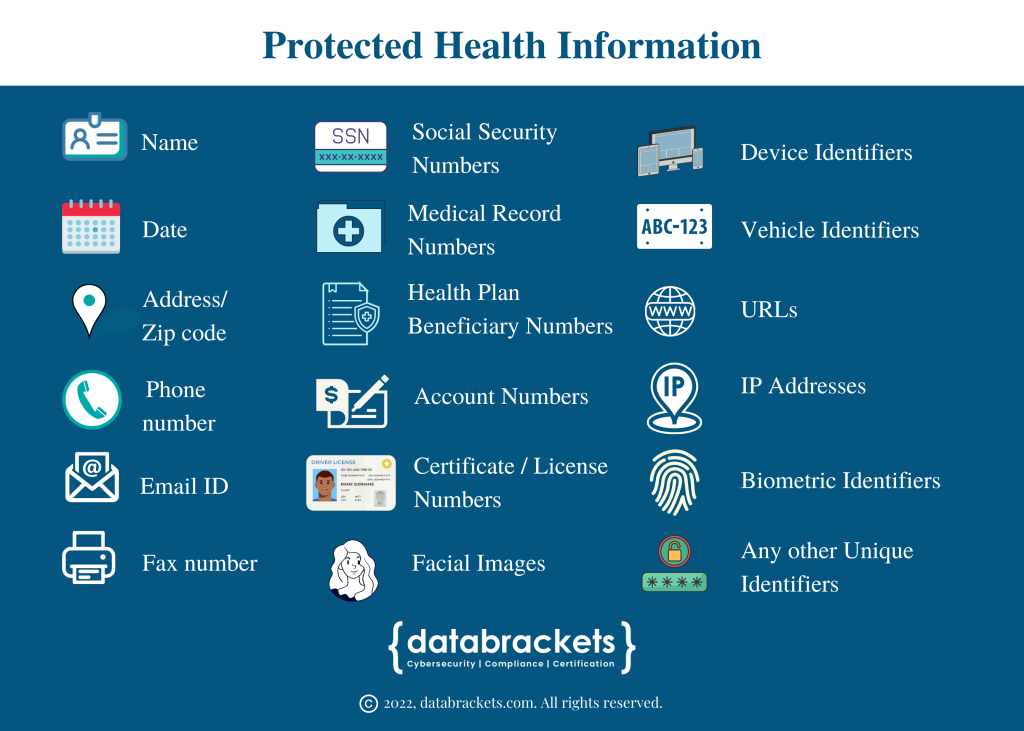
The financial consequences of HIPAA violations have escalated dramatically. According to updated 2025 penalty structures, fines can reach up to $1,919,173 annually per violation. What makes this particularly devastating? These penalties are assessed per violation, not per incident—meaning a single breach involving thousands of patient records can multiply into millions in fines.
In Q3 2025 alone, 139 breach incidents compromised PHI for 9.5 million patients, with hacking and IT incidents accounting for 90.65% of breaches. Healthcare providers bore the brunt, facing average breach costs exceeding $10 million when factoring in regulatory fines, legal fees, remediation expenses, and years of reputational damage. For specialized redaction needs that help prevent such breaches, solutions like Redact PDF AI offer AI-powered tools specifically designed for secure document editing and compliance.
How AI-Powered Redaction Works: From Manual to Intelligent Automation
The shift from manual to AI-powered redaction represents a fundamental transformation in how healthcare organizations protect patient privacy. Manual redaction requires staff to physically review every document word-by-word, blacking out protected health information (PHI) like social security numbers, addresses, and medical record numbers—a process that's not only time-consuming but alarmingly prone to human error.

Modern AI-powered redaction uses machine learning algorithms to automatically detect and permanently remove sensitive information across multiple formats—documents, images, audio files, and video footage. Unlike simple "find and replace" functions, these intelligent systems recognize patterns and context, identifying PHI even when it appears in unexpected formats or locations throughout hundreds of pages simultaneously.
Here's how the technology works in practice: When a healthcare organization uploads patient records, the AI scans for all 18 HIPAA-defined identifiers, from names and dates to device serial numbers. Solutions like Redact PDF AI offer GDPR and HIPAA-compliant processing with encrypted uploads and automatic file deletion post-processing, ensuring that redacted data is permanently destroyed—not just hidden behind black boxes that could be reversed.
The results speak volumes: AI redaction vastly reduces manual labor costs while significantly enhancing accuracy and compliance staff productivity. For a busy hospital handling thousands of records monthly, this means transforming a week-long manual review process into minutes of automated, error-free redaction—critical protection in an era where a single exposed record can trigger massive regulatory fines.
HIPAA Compliance Made Simple: Meeting 2025 Security Requirements with AI Redaction
The healthcare compliance landscape just got more complex. According to HIPAA Compliance AI in 2025: Critical Security Requirements, 67% of healthcare organizations aren't prepared for the stricter HIPAA security standards taking effect this year. The stakes? Hefty fines, data breaches, and damaged patient trust.
Here's what's changed: Federal agencies now conduct annual AI inventories under the Advancing American AI Act, and healthcare organizations need to follow suit. Every AI application processing protected health information (PHI) must be documented, tracked, and secured—whether developed in-house or purchased from vendors.
The AI redaction solution makes compliance straightforward:
- Automated PHI detection: PHI Redaction Software automatically identifies and removes all 18 HIPAA-defined identifiers, including patient names, medical record numbers, and social security numbers
- Real-time processing: HIPAA-Compliant AI Agent Use Cases shows how real-time redaction removes Safe Harbor identifiers before data leaves secure environments
- De-identification confidence: Healthcare organizations can now choose between removing specific identifiers or using qualified statistical experts to verify minimal re-identification risk, according to De-identification of Protected Health Information
For organizations seeking a streamlined approach to document redaction, Redact PDF AI offers specialized secure document editing capabilities that complement broader PDF management tools, making it easier to handle sensitive healthcare documents efficiently.
The bottom line? AI-powered redaction transforms HIPAA compliance from a manual, error-prone process into an automated safeguard that scales with your organization's needs.
Real-World Applications: 5 Critical Use Cases for AI Redaction in Healthcare
Healthcare organizations face mounting pressure to share information while protecting patient privacy. AI-powered redaction has become essential for navigating this challenge across multiple scenarios. Here are five critical applications transforming how medical facilities handle sensitive data in 2025.

1. Medical Research Data Sharing
Research institutions need de-identified patient records to advance medical science. AI redaction automatically removes names, addresses, and medical record numbers while preserving crucial clinical details. According to What Is Redaction? The Complete Guide for 2025, healthcare organizations must operationalize redaction across documents, images, audio, and video—making AI essential for large-scale research collaborations that process thousands of records monthly.
2. Legal Documentation and eDiscovery
Law firms handling medical malpractice cases manage extensive files containing personally identifiable information that requires redaction before filing. How AI Is Reshaping the Ediscovery Lifecycle in 2025 explains that AI transforms this process by automating time-consuming tasks like document review and privilege detection, reducing manual redaction time by up to 85%.
3. FOIA Request Processing
Government health agencies receive hundreds of Freedom of Information Act requests annually. FOIA and the Use of AI in Government notes that the Department of Health and Human Services alone manages 19 AI use cases for handling public records. AI redaction enables faster response times while maintaining strict privacy standards.
For healthcare organizations seeking efficient, secure redaction capabilities, Redact PDF AI provides specialized document editing that balances transparency requirements with patient confidentiality—a crucial need as Healthcare AI 2025 highlights growing complications in protecting patient information under HIPAA regulations.
The Business Case: ROI and Efficiency Gains from Automated Redaction
The financial impact of AI-powered redaction extends far beyond simple time savings—it represents a fundamental shift in how healthcare organizations manage compliance costs and operational risk. According to 2025: The State of AI in Healthcare, healthcare AI tools addressing acute operational pain points are delivering measurable ROI, with administrative automation categories experiencing explosive growth.
Healthcare organizations implementing AI-powered document processing are documenting dramatic results. The Impact of AI on Healthcare Administrative Costs reveals that 73% of organizations report reduced operational costs through AI implementation, with many achieving measurable ROI within their first year. More impressively, organizations can expect administrative cost reductions of 20-40% across key functional areas.
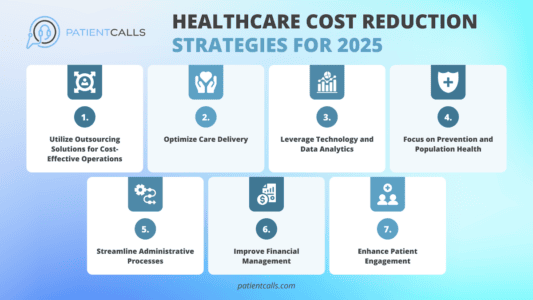
The macro-level savings are equally compelling. AI in Healthcare Business Transformation 2025 notes that McKinsey estimates AI could generate $200-360 billion in annual net savings, representing 5-10% of US healthcare spending. For redaction specifically, the math is straightforward: manual document review costs roughly $75-150 per hour, while AI-powered solutions like Redact PDF AI reduce processing time from hours to minutes while simultaneously eliminating the costly errors that trigger HIPAA penalties averaging $1.5 million per violation.
Consider a mid-sized health system processing 10,000 records annually. Traditional redaction requires approximately 30 minutes per document—that's 5,000 staff hours yearly. Automated redaction reduces this to 5 minutes per document, freeing 4,167 hours for higher-value work. Beyond time savings, the elimination of human error in PHI exposure provides immeasurable risk mitigation value in today's stringent regulatory environment.
Choosing the Right AI Redaction Solution: Key Features and Evaluation Criteria
Selecting the right AI redaction tool isn't just about checking boxes—it's about finding a solution that transforms document security from a compliance burden into a strategic advantage. With healthcare organizations reducing manual review time by up to 98% through advanced AI redaction, the stakes for making the right choice have never been higher.
Essential Features That Matter
When evaluating AI redaction solutions, prioritize accuracy in PII detection as your foundation. According to comparison frameworks from industry experts, the best platforms detect SSNs, credit card numbers, and Protected Health Information with precision that surpasses manual review, even in scanned documents through advanced OCR technology.
Look for multi-format support that handles PDFs, images, and documents across all your systems. Integration capabilities matter equally—your redaction tool should mesh seamlessly with existing workflows rather than creating new silos. For healthcare providers specifically, HIPAA compliance features with comprehensive audit trails and metadata removal are non-negotiable.
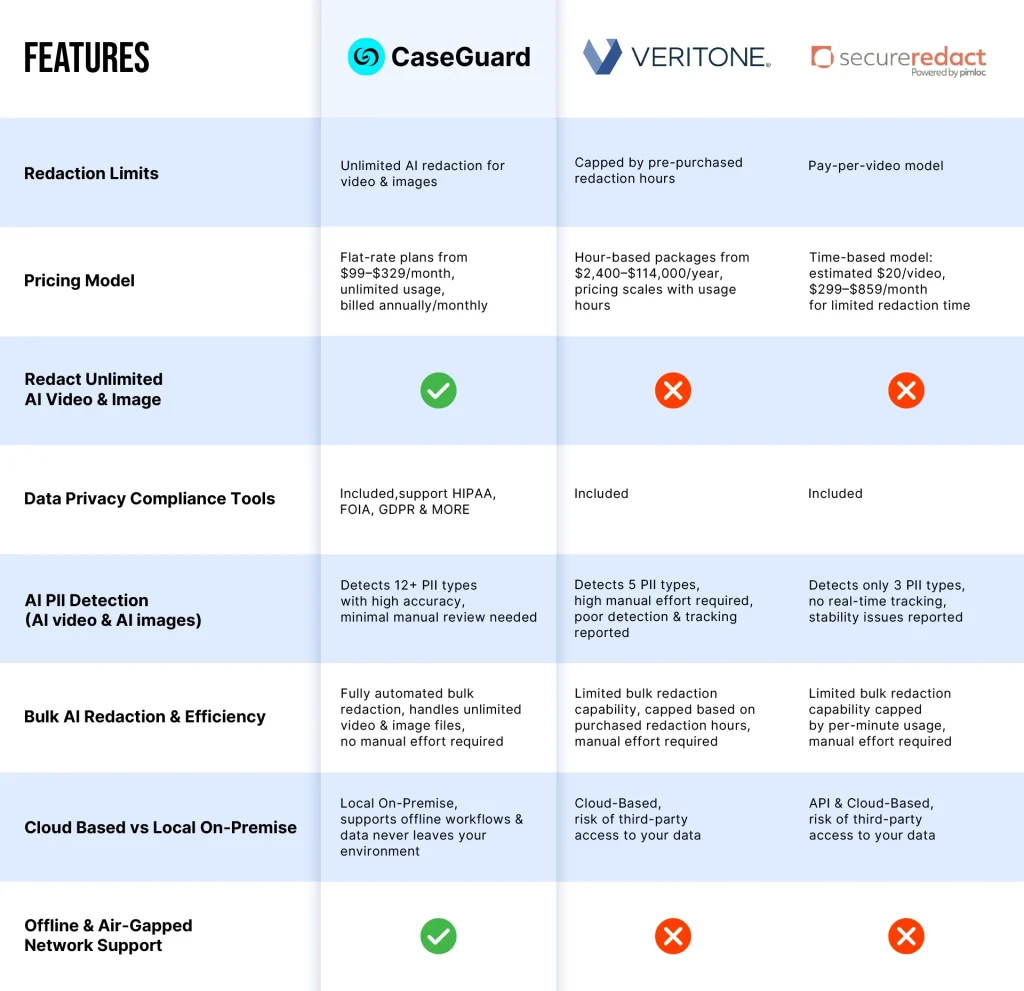
Redact PDF AI emerges as the optimal choice for healthcare organizations, combining enterprise-grade security with exceptional automation. The platform processes clinical documentation, research studies, and insurance claims while maintaining comprehensive logs of redaction events for regulatory compliance. Unlike alternatives that sacrifice either power or simplicity, Redact PDF AI delivers both—ensuring permanent deletion of sensitive data while maintaining user-friendly workflows that don't require extensive training.
Consider your use case carefully: legal teams handling high volumes need scalability plus robust audit trails, while smaller healthcare practices benefit most from solutions emphasizing ease of use with uncompromising HIPAA compliance.
Implementation Best Practices: Getting Started with AI-Powered Redaction
Rolling out AI redaction technology doesn't have to feel overwhelming. Think of it like teaching a highly skilled assistant—one that never gets tired and catches every detail you might miss at 4 PM on a Friday.
Start with an AI Use Case Inventory
Before diving in, map where redaction bottlenecks exist in your organization. Are FOIA officers spending hours manually hunting through police reports? Is your HIM team drowning in medical records requests? According to What Is Redaction? The Complete Guide for 2025, healthcare organizations handling hundreds of case files containing PII must redact before sharing—making this assessment critical.
For healthcare organizations seeking a reliable, HIPAA-compliant solution, redact-pdf.ai offers automated detection with encrypted uploads and automatic file deletion post-processing, perfect for handling sensitive medical documents without storing your data permanently.
Build Your Zero-Trust Workflow
Create clear protocols for staff training that emphasize the "trust but verify" approach. As detailed in How to Achieve Zero-Trust Document Redaction with AI in 2025, implementing a step-by-step zero-trust workflow ensures every redacted document undergoes validation, even when AI handles the heavy lifting.
Essential Testing Procedures:
- Run pilot programs with non-critical documents first
- Establish human review checkpoints for high-stakes files
- Document false positive and false negative rates
- Create feedback loops for continuous AI improvement
Modern solutions like those described in How to Automate PDF Redaction for Compliance in 2025 permanently remove underlying data across multiple pages simultaneously, ensuring GDPR and HIPAA compliance while eliminating human error.
Conclusion: Future-Proofing Healthcare Data Privacy with AI
The healthcare data breach crisis of 2025—with over 29 million individuals affected in just six months—demands immediate action. AI-powered redaction isn't a luxury anymore; it's your frontline defense against catastrophic HIPAA violations that can cost millions in fines and irreparable reputational damage.
For healthcare administrators: Start by conducting an AI use case inventory to identify your most vulnerable document workflows. Prioritize high-volume areas like FOIA requests and research data sharing where manual redaction creates dangerous bottlenecks.
For compliance officers: Focus on solutions offering comprehensive audit trails and permanent data deletion. Redact PDF AI provides HIPAA-compliant processing with encrypted uploads and automatic file deletion—crucial safeguards in today's stringent regulatory environment.
For IT teams: Look beyond basic redaction features to integration capabilities. The best solutions mesh seamlessly with existing EHR systems while delivering 20-40% administrative cost reductions documented across the industry.
The 2025 landscape isn't just about meeting compliance standards—it's about transforming document security from a resource drain into a strategic advantage. Organizations implementing AI redaction are reporting 98% time savings and near-perfect accuracy rates. Can your current manual processes deliver those results?
Take action today: Evaluate your redaction workflows, calculate your current risk exposure, and explore AI solutions designed specifically for healthcare's unique privacy challenges.
FAQ: Common Questions About AI-Powered Redaction in Healthcare

Is AI redaction HIPAA compliant?
Yes, when properly implemented. AI redaction systems must follow the HIPAA Security Rule by encrypting data, maintaining audit logs, and implementing strict access controls. According to HIPAA Compliance AI in 2025, healthcare organizations must obtain documented security verification from AI vendors before allowing access to protected health information. The key is de-identifying PHI before processing and storing re-identification keys separately in secure hardware modules.
How accurate is AI compared to manual redaction?
AI redaction significantly outperforms manual methods. bestCoffer AI Redaction Tool achieves up to 90% accuracy with continuous algorithm updates. More importantly, Thodex's research shows automated redaction slashes processing time by 98% while eliminating human error that often causes missed sensitive content.
Can AI redact video and audio files?
Absolutely. Modern AI solutions like VIDIZMO Redactor can automatically detect and redact PHI identifiers from videos, audio recordings, documents, and images. SecureRedact specifically simplifies video and audio review with automated redaction tools designed for healthcare applications.
What happens if PHI is missed during redaction?
Under HIPAA, healthcare organizations remain liable for how AI systems process PHI, even if errors originate from the model itself. According to The Builder's Notes, 90% of healthcare LLM projects fail due to compliance issues rather than technical limitations. That's why Redact PDF AI offers comprehensive solutions for secure document editing with multiple verification layers to catch potential leaks.
How much does AI redaction software cost?
Pricing varies based on volume and features. CaseGuard's analysis reveals that limited solutions create hidden costs through inefficiency and potential compliance violations. Organizations should factor in implementation costs, training, and integration expenses alongside licensing fees.
Can AI redaction integrate with existing EHR systems?
Yes, most enterprise AI redaction tools offer EHR integration capabilities. Dialzara's research highlights platforms that securely integrate diverse systems through encrypted workflows, allowing healthcare providers to automate redaction within their existing infrastructure while maintaining HIPAA compliance.