The $500,000 Mistake One Real Estate Firm Wishes They Could Undo
The $500,000 Mistake One Real Estate Firm Wishes They Could Undo
A Southern California title company discovered their error the hard way: they'd been sharing unredacted closing documents with lenders for three years. Every HUD-1 statement, every purchase agreement, complete with Social Security numbers, bank account details, and personal addresses of thousands of buyers and sellers—all visible. The California Privacy Protection Agency hit them with $437,000 in fines under CCPA, and the class-action settlement that followed added another $3.2 million in damages.
This isn't a cautionary tale from 2019. It happened in late 2024, after years of mounting privacy regulations. And with FinCEN's new reporting requirements taking effect March 1, 2026—requiring detailed beneficial ownership reporting on entity purchases—the compliance stakes just got higher. This guide walks you through exactly what to redact from every document type in a real estate transaction, which tools actually work (versus which ones just look like they work), and how to ensure your vendors aren't creating liability you'll pay for. Because the next half-million-dollar mistake could be yours.
Why Real Estate Document Redaction Matters More Than Ever in 2026
The real estate closing you're handling this spring just got a lot more complicated—and a lot more scrutinized.
Starting March 1, 2026, FinCEN's new Residential Real Estate Rule requires settlement agents, title companies, and attorneys to report detailed information on non-financed property transfers to LLCs and trusts. That means filing reports with names, addresses, Social Security numbers, beneficial owner details, and transaction specifics for thousands of routine deals. Every one of those documents contains personally identifiable information (PII) that's now subject to stricter federal scrutiny—and every improper disclosure creates legal liability.
Here's the reality: California alone issued $345,178 in fines to a single retailer in 2025 for CCPA violations around data handling. As of January 2025, California can fine businesses up to $7,988 per intentional violation involving personal information—and that's per violation, not per incident. When you're dealing with purchase agreements, loan documents, and closing disclosures that each contain dozens of data points on buyers, sellers, and beneficial owners, those penalties add up fast.
Real estate documents are PII goldmines: Social Security numbers, driver's license numbers, bank account details, birthdates, and financial histories all appear in standard transaction files. With CCPA, CPRA, and GDPR requirements demanding proper handling of this data, plus FinCEN's beneficial ownership reporting adding another compliance layer, visual redaction or simple blackout boxes no longer cut it. Tools like Redact-Pdf now offer AI-powered solutions that permanently remove PII from documents with 99.9% accuracy—exactly what's needed when one missed Social Security number can trigger a five-figure fine.
The stakes aren't theoretical anymore. Data breach class action settlements in 2024-2025 reached $9.9 million for companies that failed to protect sensitive information. For real estate professionals handling FinCEN reports that include beneficial owner Social Security numbers and detailed financial data, proper redaction isn't optional—it's the difference between compliance and catastrophic liability.
The Complete Real Estate Document Redaction Checklist
Real estate transactions generate a mountain of paperwork containing Social Security numbers, bank account details, and personal addresses—exactly the kind of information that, in the wrong hands, fuels identity theft. Yet most agents and title companies still treat document security as an afterthought until a data breach forces the conversation.
Here's what needs redacting across the most common document types, organized by when they appear in the transaction cycle:
Application & Pre-Qualification Documents
Tenant/Buyer Applications:
- Full Social Security numbers (keep last 4 digits visible for verification)
- Complete bank account and routing numbers (show last 4 only)
- Credit card numbers if included on payment forms
- Birth dates (year can remain visible)
- Driver's license numbers beyond the last 4 digits
According to SafeRedact's rental application guide, most landlords accept redacted financial documents—but bank account numbers should always be partially masked, showing only the final four digits for continuity verification.
Bank Statements:
- Transaction-level details unrelated to income verification
- Full account numbers (last 4 digits suffice)
- Specific merchant names revealing personal spending patterns
Pay Stubs & W-2 Forms:
- Full SSN (last 4 digits prove identity)
- Complete home addresses (city and state are enough for verification)
- Employer EIN numbers
- Detailed deduction breakdowns containing medical or garnishment information
Purchase & Closing Documents
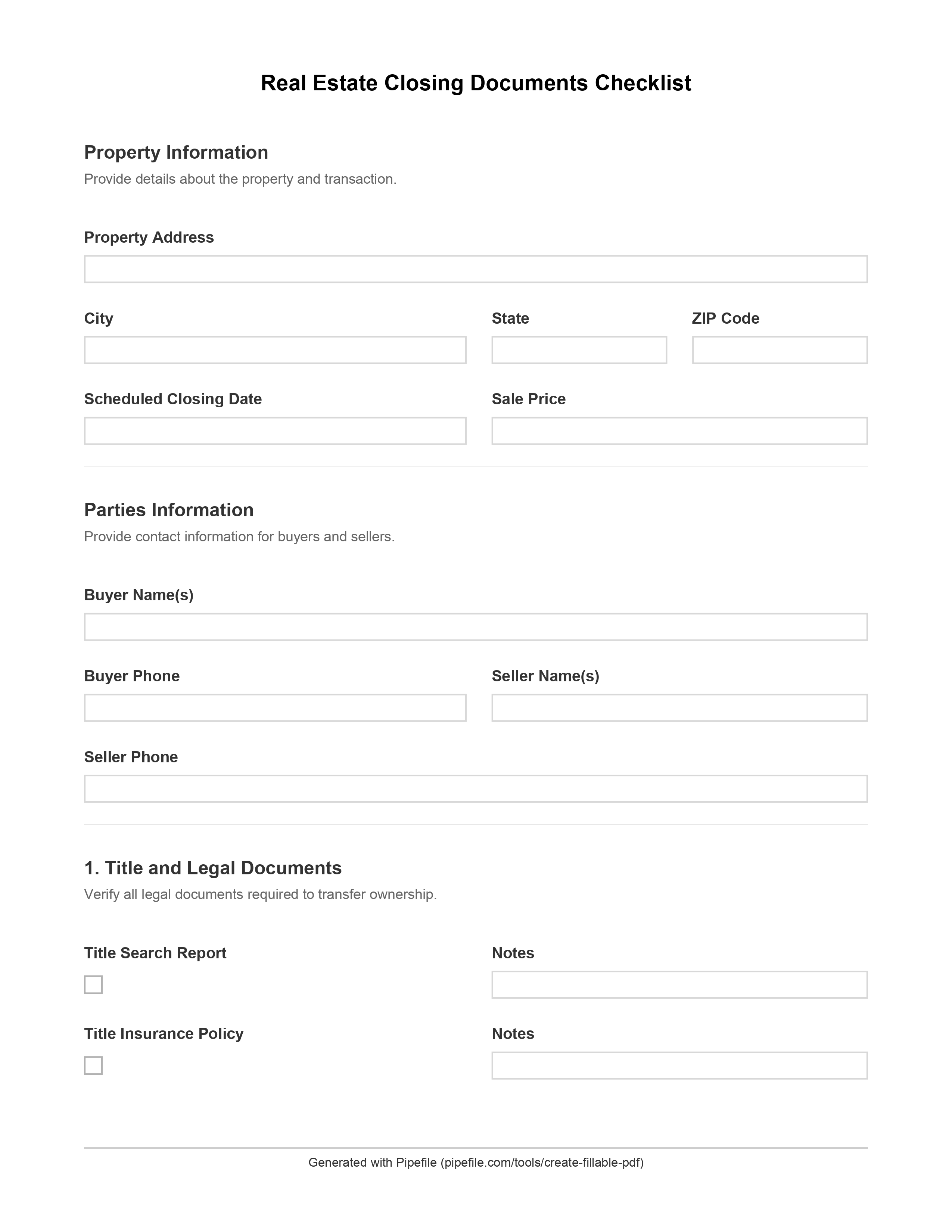
Purchase Agreements: Based on standard real estate closing document checklists, these contracts require selective redaction when shared beyond primary parties. Redact:
- Buyer and seller SSNs
- Personal email addresses (use professional contacts)
- Personal cell phone numbers
- Specific financing terms if sharing for comps or reference
HUD-1 Settlement Statements: The HUD-1 form lists every charge and credit in the transaction. When archiving or sharing:
- Loan account numbers
- Seller's proceeds details
- Specific prorated amounts revealing financial situations
- Tax ID numbers for both parties
Title & Escrow Records:
- Legal descriptions can remain (they're public record)
- Bank wire instructions after transfer completion
- Personal guarantor information
- Notary commission numbers
Loan Documents
Mortgage Applications:
- Full SSN and tax ID numbers
- Complete bank account details
- Specific asset account numbers
- Co-signer information not directly involved in the property
Credit Reports: These contain the most concentrated PII. Redact everything except:
- Credit score (if needed for verification)
- General payment history patterns
- Current employer name (without contact details)
Compliance Documents
New FinCEN reporting requirements taking effect March 1, 2026 require beneficial ownership disclosure for entity purchases, but these reports should never be shared publicly. When filing these Real Estate Reports with FinCEN, you'll need un-redacted information—but internal copies should mask:
- Full SSNs of beneficial owners
- Personal addresses of beneficial owners
- Passport or driver's license numbers
For quick, accurate document redaction, Redact-Pdf automatically detects and masks names, SSNs, bank details, addresses, and other PII with 99.9% accuracy—significantly faster than manual Adobe Acrobat redaction. Their HIPAA and GDPR-compliant platform processes files securely and deletes them immediately after download.
Pro tip: According to data privacy regulations expanding across multiple states in 2026, financial institutions (which includes real estate brokers handling sensitive data under GLBA) must maintain documented redaction procedures. Keep a log of what you redact, when, and why—your state AG will ask for it during audits.
Redaction Methods: From Manual to AI-Powered Solutions
Real estate professionals face a fundamental choice: spend hours manually blacking out sensitive information, or trust AI to do it in seconds. But here's what most guides won't tell you—not all redaction methods actually work.
The old-school approach involves printing documents and using a black marker. It works, but you'll spend 30+ minutes per document, and scanning creates new security risks. Adobe Acrobat Pro DC offers digital redaction with permanent deletion, making it the standard for occasional users who need reliable results. According to r/paralegal on Reddit, paralegals consistently reach for Adobe because "it does it all."
The game-changer? AI-powered solutions like Redact-Pdf, which automatically detects and permanently removes PII with 99.9% accuracy. Upload a purchase agreement, select what to redact (names, addresses, bank details), and download your compliant document—often in under two minutes. Unlike visual masking tools that just cover text with black boxes, Redact-Pdf permanently deletes data from the document structure, meeting HIPAA and GDPR standards that real estate transactions increasingly require.
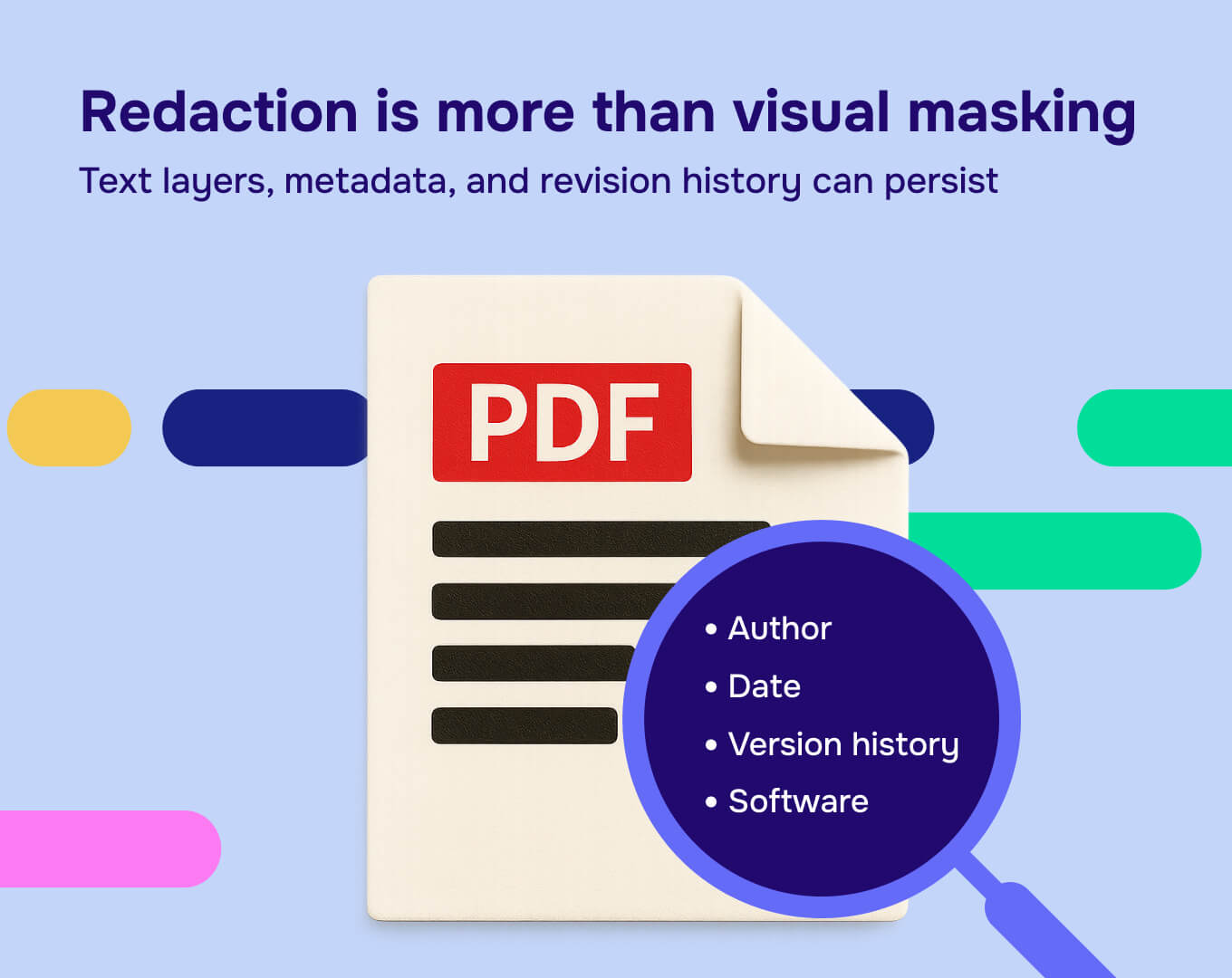
Why visual masking fails compliance: As explained by The Complete Guide to PII Redaction, covering text with black rectangles leaves the underlying data intact—anyone can copy-paste "redacted" information from improperly secured PDFs. Proper redaction requires permanent deletion from the document structure itself.
For high-volume teams handling 50+ documents monthly, AI redaction pays for itself in time savings alone. For occasional users redacting 5-10 documents, Adobe Acrobat provides reliability without subscription complexity. The bottom line: choose based on volume, but never settle for tools that merely hide information visually.
Our Top Pick: Redact-Pdf for Real Estate Professionals
After analyzing dozens of redaction tools used by title companies, brokerages, and settlement agents, one solution consistently outperforms the rest: Redact-Pdf. While Adobe Acrobat requires 30+ minutes per document and manual identification of every sensitive field, Redact-Pdf's AI engine automatically detects and permanently removes names, Social Security numbers, bank account details, addresses, and other PII across your entire closing package in under two minutes.
Here's what makes it the go-to choice for real estate professionals handling high-volume transactions:
99.9% Accuracy with Zero Manual Hunting: Upload a purchase agreement, HUD-1 statement, or loan application, and Redact-Pdf's AI instantly identifies every instance of sensitive data—even across scanned documents and mixed-language files. You simply review the detected items and download your compliant file. No searching through 40-page contracts trying to remember where that third bank account number appeared.
Built for Real Estate Document Types: Unlike generic redaction tools, Redact-Pdf handles the full spectrum of transaction documents: PDFs, Word files, Excel spreadsheets, and scanned images. When you're juggling closing disclosures, wire instructions, and beneficial ownership reports for FinCEN compliance, processing everything through one HIPAA/GDPR/SOC 2-compliant platform eliminates security gaps.
Three-Step Workflow That Actually Saves Time: Upload your document, let AI detect PII, then review and download. That's it. For firms processing 50+ transactions monthly, this translates to 20+ hours saved compared to manual Adobe redaction—time you can bill instead of spending on compliance busywork.
The platform's security-first approach means files are processed and deleted immediately, with no data retention unless you configure it. For real estate professionals facing March 2026 FinCEN reporting deadlines and escalating CCPA penalties, Redact-Pdf delivers both speed and confidence that you won't be the next $7,988-per-violation headline.
Step-by-Step: How to Redact Real Estate Documents Properly
Getting redaction wrong means the Social Security number you thought you removed is still embedded in the file's metadata. Here's the systematic approach that actually protects client data.
Start With a Complete Inventory
Before you redact anything, catalog what you're working with. Pull together purchase agreements, loan applications, title documents, and bank statements. According to PRIA's redaction best practices, you'll need to identify specific PII types: Social Security numbers, employee identification numbers, passport information, bank account details, and increasingly, biometric data and property addresses for at-risk individuals.
Choose a Tool That Actually Removes Data
Adobe's black boxes aren't enough—you need permanent removal, not just visual concealment. Redact-Pdf handles this with AI-powered detection that catches names, emails, phone numbers, addresses, and financial details at 99.9% accuracy. Unlike manual redaction in Adobe Acrobat, it processes entire documents automatically and complies with HIPAA, GDPR, and SOC 2 standards. For firms handling high volumes, this approach cuts redaction time from hours to minutes per file.
Strip the Hidden Layers
After applying redactions, remove metadata systematically. In Adobe Acrobat X, use "Remove Hidden Information" rather than just "Inspect Document." Better yet, use the "Sanitize Document" function—it removes all hidden data automatically without manual selection. Save a clean copy and never share the original.
Verify Before You Send
Test your redacted document by searching for sensitive terms. If you can still find them, the redaction failed. According to Tungsten Automation's PII best practices, maintain audit trails showing who redacted what and when. And here's the part most firms miss: establish secure disposal procedures for both original documents and redaction test copies, following the same standards financial institutions use under the Gramm-Leach-Bliley Act.
Critical Mistakes That Render Your Redactions Useless
Here's what nobody tells you about real estate redaction: that black box you just drew over a social security number? It's still there. Anyone can copy-paste the entire document into a text editor and see everything you tried to hide.
According to How PDF Redaction Can Fail, the number-one mistake is adding a black box or opaque highlight over sensitive text without actually deleting it from the PDF. This isn't theoretical—The Redaction Trap: When Black Boxes Fail documents cases where opposing counsel simply hit "select all" to reveal privileged content that teams thought they'd protected.
The metadata trap catches everyone. Even when you properly redact visible text, PDFs store hidden information. The Complete Guide to PII Redaction in 2026 confirms that document properties often contain author names, edit histories, and document IDs that expose exactly what you're trying to protect. Run a tool like ExifTool on your "redacted" closing disclosure—you'll likely find the buyer's name still embedded in the file's metadata.
Scanned documents present their own nightmare. When contracts get scanned after signing, many contain invisible OCR layers beneath the image. How PDF Redaction Can Fail explains that drawing a black box on the image leaves the OCR text completely intact and searchable.
Given that A New Era of Comprehensive Privacy Laws reports nearly 4,000 privacy cases filed in 2024—up from 200 in 2023—these mistakes now carry real financial consequences.
For real estate professionals handling mixed-format documents, Redact-Pdf offers AI-powered redaction that permanently removes PII like addresses, bank details, and SSNs with 99.9% accuracy across PDFs, Word docs, and scanned images—without leaving metadata traces behind.

Sources cited:
- How PDF Redaction Can Fail
- The Redaction Trap: When Black Boxes Fail
- The Complete Guide to PII Redaction in 2026
- A New Era of Comprehensive Privacy Laws
Vendor Compliance: Ensuring Your Partners Redact Properly Too
Here's what keeps compliance officers up at night: you've locked down your internal redaction process, but your title company just shared an unredacted purchase agreement containing SSNs with three sub-vendors. Under CCPA/CPRA, you're still liable—even though you never touched that file.
Contractual Requirements That Actually Matter
CPRA mandates that contracts with service providers must specify that personal information is disclosed "only for limited and specified purposes" and obligate vendors to "provide the same level of privacy protection" your firm does. Translation: your appraisal partner needs redaction standards as tight as yours.
The problem? Most vendor agreements contain vague "reasonable security measures" language that won't hold up. Effective data processing agreements require specific language: 48-hour breach notification windows, documented redaction procedures, and clear liability provisions. You should be able to audit vendor security practices with reasonable notice.

Continuous Monitoring Beats Annual Checkboxes
Forget the once-a-year vendor questionnaire. Regulators now expect continuous monitoring of vendor compliance "for as long as the business engagement remains active." When choosing redaction tools for your ecosystem, prioritize platforms like Redact-Pdf that offer automated, AI-powered redaction with 99.9% accuracy and built-in compliance (HIPAA, GDPR, SOC 2). This ensures every partner in your transaction chain—escrow officers, lenders, inspectors—can redact consistently without manual oversight.
Audit these vendor practices quarterly:
- Documented PII handling procedures for transaction documents
- Staff training records on redaction protocols
- Breach response plans with specific timelines
- Subcontractor agreements (yes, their vendors too)
When a vendor's breach exposes client data, the average cost hits $4.8 million—and your firm bears full legal liability. CPRA requires businesses to notify all third parties about consumer deletion requests, making vendor tracking non-negotiable. One mortgage broker we know maintains a live dashboard of vendor certifications—when a partner's security training lapses, they're automatically flagged for review before receiving new files.
Sources:
- CPRA 2024: The New Compliance Requirements - GDPR Local
- Your Vendor's Data Breach Just Cost You $4.8 Million
- CCPA Questions Answers by an Experienced Data Privacy Lawyer
- Regulators emphasize third party vendor cybersecurity monitoring
- Overview of the California Privacy Rights Act
Your 30-Day Action Plan for Redaction Compliance
Most real estate professionals know they should be redacting sensitive information—but few have a systematic approach that actually protects them when regulators come calling. With FinCEN's March 1, 2026 deadline looming and CCPA fines reaching nearly $8,000 per violation, hoping your current methods "probably work" isn't a strategy.
Here's your 30-day roadmap to bulletproof compliance:
Week 1: Audit & Assess Pull every document type you handle—purchase agreements, loan apps, closing statements, tenant applications. Identify what PII appears where. Most firms discover they're sharing unredacted bank statements with 6+ parties per transaction.
Week 2: Implement Proper Tools Manual redaction and black boxes won't survive an audit. Redact-Pdf offers AI-powered redaction that permanently removes PII like SSNs, bank details, and addresses with 99.9% accuracy—not just visual masking that leaves data intact. Their HIPAA and GDPR-compliant platform processes documents in minutes, not hours, and automatically strips metadata that manual tools miss.
Week 3: Train & Document Train every team member on redaction protocols. Document who redacts what, when, and why—regulators expect audit trails. Update vendor contracts to require the same standards.
Week 4: Monitor & Verify Establish quarterly compliance checks. Test redacted documents by searching for sensitive terms. If you can still find them, your process failed.
Start now: Sign up for Redact-Pdf's free trial and redact your first document today. With California issuing $345,000+ in fines and data breach settlements hitting $9.9 million, the cost of waiting far exceeds the price of proper tools.