Top 5 Challenges and Solutions in Scaling AI PDF Redaction for Enterprises in 2025
Top 5 Challenges and Solutions in Scaling AI PDF Redaction for Enterprises in 2025
Picture this: Your legal team just received 50,000 documents for a high-stakes case review, and you have 48 hours to redact all sensitive information before public disclosure. Manual redaction would take weeks. Your career—and potentially millions in liability—hangs in the balance. This isn't a hypothetical nightmare scenario anymore. It's the daily reality for enterprises in 2025, where data privacy regulations have teeth, and a single redaction error can trigger multi-million dollar fines under GDPR or CCPA.
The AI redaction revolution has arrived, with 78% of enterprises now leveraging AI technologies. But here's what the statistics don't tell you: scaling from pilot programs to production-ready AI PDF redaction creates challenges that blindside even the most prepared organizations. The gap between "AI redaction works in our test environment" and "AI redaction works across 10,000 documents daily in five languages" is where most enterprises stumble.
In this guide, you'll discover the five critical challenges that derail enterprise AI redaction projects—and more importantly, the proven solutions that separate successful implementations from expensive failures. Whether you're processing medical records, financial statements, or legal documents, these insights will help you navigate the scaling journey with confidence and avoid the costly mistakes that plague unprepared organizations.
The Current State of Enterprise AI Redaction: Where We Stand in 2025
The enterprise AI landscape has undergone a dramatic transformation. According to 200+ AI Statistics & Trends for 2025: The Ultimate Roundup, AI adoption has reached an impressive 78% across enterprises, with companies seeing ROI returns of $3.70 for every dollar invested. This isn't just about experimentation anymore—it's about production-ready solutions that deliver measurable results.
The shift from pilot programs to full production deployment has been particularly striking. The State of AI Adoption 2025 reveals that enterprise AI strategy matured significantly between 2024 and 2025, moving from "pilot-heavy, hype-led" approaches to "execution-led, outcome-focused" deployments. The data shows that State of Enterprise AI Adoption - ISG found 31% of AI use cases reached full production in 2025—double the rate from 2024.
For document redaction specifically, this evolution means moving beyond manual, time-consuming processes to automated solutions powered by AI. According to Why Redacting Software Matters for Your Business Success in 2025, modern AI redacting software can handle various data types across documents, videos, audio recordings, and images—permanently removing sensitive information rather than simply hiding it.
The urgency is clear: with data privacy regulations tightening and the volume of sensitive documents growing exponentially, enterprises can't afford the risks and inefficiencies of manual redaction. The market has responded with solutions like Redact PDF, which brings Adobe Acrobat's trusted PDF capabilities together with AI-powered insights to streamline redaction workflows. Companies implementing these automated solutions are reducing operational costs by up to 30% while significantly decreasing the risk of compliance violations and data breaches.
Challenge #1: Accuracy and Compliance at Scale - Balancing Speed with Precision
.webp)
When enterprises scale AI PDF redaction to handle thousands of documents daily, they face a critical tightrope walk: maintaining pinpoint accuracy while meeting strict compliance deadlines. According to What Is Redaction? The Complete Guide for 2025, redaction sits at the center of compliance with HIPAA, FOIA, FERPA, PCI-DSS, GDPR, and CJIS regulations—making accuracy non-negotiable.
The real danger lies in two opposing failures. Over-redaction removes too much information, rendering documents useless for legal proceedings or business operations. Under-redaction exposes protected data, triggering penalties under CCPA compliance requirements, which holds companies liable even for accidental collection of California residents' personal information.
Research reveals a sobering reality: Adobe Redaction Risks highlights that many users draw black rectangles over text instead of using proper redaction tools, leaving sensitive data fully recoverable. Even official redaction features can leave behind subtle layout and glyph data that exposes information users believed was permanently removed.
Modern solutions leverage AI to bridge this gap. PDF Redaction uses advanced AI models to automatically detect and redact PII, PHI, and financial data with high accuracy, while still offering manual editing flexibility for edge cases. For organizations handling multiple file types beyond PDFs, Secure Redact offers unified compliance across video, audio, and documents—ensuring consistent accuracy and traceability across every workflow.
Sources cited:
- What Is Redaction? The Complete Guide for 2025 - CaseGuard Studio
- CCPA compliance requirements for 2025: A practical guide
- Adobe Redaction Risks: Why It's Not Safe in 2025
- PDF Redaction
- 5 Leading Compliance Tools for PDF Redaction (2025)
Solution #1: Advanced AI Pattern Recognition and Contextual Analysis

Modern AI redaction tools have evolved far beyond simple keyword matching. According to Artificial Intelligence and Machine Learning in Real-Time System Operations: White Paper, today's systems leverage Natural Language Processing (NLP), computer vision, and deep learning algorithms to understand document context—not just identify isolated words. This means the AI can distinguish between "John Smith" as a client name (requiring redaction) and "John Smith Street" as a location (potentially safe to keep).
The results speak for themselves. Organizations using AI-Powered OCR are achieving 95-99% accuracy rates with AI-enhanced document recognition, compared to traditional OCR's 85-92%. For enterprises processing thousands of sensitive documents monthly, this 10-point accuracy jump translates to significantly fewer data breaches and compliance violations.
Practical implementation strategies include:
- Start with pre-trained models that recognize common sensitive data patterns (SSNs, credit cards, medical records)
- Fine-tune the AI on your specific document types and industry terminology
- Implement human-in-the-loop validation for the first 90 days to improve accuracy
For enterprises ready to implement intelligent redaction at scale, Redact PDF stands out as the optimal solution. While research from RedactBuster: Entity Type Recognition from Redacted Documents shows that poorly implemented redaction can still leak entity types through context clues, Redact PDF employs advanced contextual analysis that prevents these vulnerabilities while maintaining document usability.
Challenge #2: Integration Complexity with Legacy Document Management Systems
Picture this: Your enterprise has invested millions in document management infrastructure over the past two decades. Now, you're ready to deploy AI redaction—but your legacy systems weren't designed for modern AI capabilities. You're not alone. Organizations invest an average of $4.2 million annually maintaining legacy systems that require modernization for AI compatibility.

The Triple Threat of Integration:
The integration challenge manifests in three critical areas. First, API compatibility issues arise because legacy apps weren't built to handle AI models, modern algorithms, or cloud-based processing. Second, data migration becomes complex as legacy systems often store information in siloed databases or outdated formats. Third, legacy data formats and database structures clash with modern cloud platforms, causing up to 45% of migration failures.
Strategic Solutions:
Forward-thinking enterprises are adopting a hybrid approach. Use ETL (Extract, Transform, Load) pipelines to convert legacy data into AI-friendly formats while implementing API wrappers that enable seamless integration between APIs and legacy systems. Solutions like Redact PDF are purpose-built to work alongside existing document workflows, offering cloud-based AI redaction without requiring complete system overhauls—letting you modernize capabilities while preserving your infrastructure investments.
Solution #2: API-First Architecture and Flexible Deployment Models
Enterprise AI redaction demands flexibility that matches your infrastructure reality. Whether you're managing cloud-native applications, on-premise data centers, or hybrid environments, choosing a solution with robust API capabilities and deployment versatility is critical for scaling without compromising security or compliance.
Selecting the Right API Architecture
Modern document redaction solutions with API-first design enable seamless integration into existing workflows. Leading platforms like Nutrient AI redaction API and Azure AI Language offer turnkey cloud APIs that deploy in 2-4 weeks with minimal setup, providing SOC 2 and GDPR certifications out of the box. For organizations requiring a unified approach across multiple file types, Secure Redact combines document redaction with multimedia anonymization, eliminating the need for separate compliance platforms.

Hybrid Deployment Best Practices
Hybrid cloud models unite private infrastructure with public cloud capabilities, letting you process non-sensitive redactions at scale while keeping regulated data on-premises. A multinational bank might run AI fraud analytics in the cloud while maintaining EU transaction data in private clusters—balancing compliance with performance. Platforms like Airbyte Enterprise Flex demonstrate this approach with hybrid control plane architecture that keeps sensitive data in your VPC while enabling cloud orchestration.
Integration Checklist:
- Verify API supports your primary document formats (native PDF, scanned images)
- Confirm deployment options align with data residency requirements
- Test multilingual content handling if operating globally
- Validate audit trail capabilities meet compliance standards
- Ensure scaling metrics match projected volume growth
Challenge #3: Processing Speed and Performance Bottlenecks at Enterprise Volume
When your organization needs to redact millions of pages monthly, processing speed becomes more than a technical concern—it's a business-critical challenge. According to Enterprise AI in 2025: 7 stats that tell the real story, 89% of employees save over 9 hours per week with document AI, but those gains evaporate when systems can't handle enterprise-scale volumes.

Think of batch processing like a highway during rush hour—add too many vehicles, and everything grinds to a halt. Research from The Top 20 Problems with Batch Processing reveals that traditional batch systems introduce latency issues and reliability problems that make them "increasingly unfit for today's real-time, scalable, and reliable data needs."
The solution lies in hybrid architectures. Adobe Acrobat Studio, available through Redact PDF, demonstrates this approach by combining batch processing capabilities with real-time AI insights, creating a comprehensive suite that handles high-volume redaction without sacrificing speed. Their platform integrates Adobe Express tools, enabling organizations to process documents efficiently at scale while maintaining consistent performance.
For maximum performance, consider implementing distributed processing frameworks. According to 2025 GenAI-fueled Intelligent Document Processing Guide, IDP leverages AI to understand both structured and unstructured data, dramatically improving efficiency. Complement this with capacity planning—monitor server loads, implement auto-scaling infrastructure, and establish performance baselines. Organizations that adopt these strategies report processing thousands of pages per hour while maintaining sub-second response times for individual document queries.
Solution #3: Distributed Processing and Intelligent Resource Allocation
When enterprise AI redaction systems buckle under pressure, the answer isn't just "add more servers"—it's about working smarter with what you have. Modern distributed processing architectures split massive redaction workloads across multiple nodes, dramatically reducing processing times from hours to minutes.
Think of it like a restaurant kitchen during dinner rush: instead of one chef handling every dish, you distribute tasks. One station preps, another cooks, another plates. According to Parallel Computing Strategies for Enhanced Data Processing Optimization, dynamic load balancing significantly enhances processing efficiency by intelligently routing work to available resources in real-time.

Key implementation strategies:
- Intelligent queuing systems that prioritize urgent documents while batching similar files for efficiency
- Parallel processing frameworks that break PDF pages into chunks, processing them simultaneously across multiple cores
- Resource allocation algorithms that monitor system load and adjust distribution dynamically, as detailed in Load Balancing in Parallel Computing
For enterprises looking to implement these strategies without building from scratch, Redact PDF leverages Adobe's proven distributed processing infrastructure to handle massive document volumes. Their system automatically scales resources based on demand, ensuring consistent performance whether you're redacting ten documents or ten thousand.
Performance benchmarks from production environments show 5-10x speed improvements when properly implementing distributed processing versus traditional single-threaded approaches.
Challenge #4: Cost Management and ROI Justification
When scaling AI PDF redaction, enterprises face a financial puzzle that keeps CFOs up at night. The visible subscription costs are just the tip of the iceberg. According to comprehensive 2025 enterprise research, enterprise implementations typically cost 3-5 times the advertised subscription price when accounting for integration, customization, and infrastructure scaling.
Consider this: basic redaction platforms start at $19 monthly for 20 documents, but enterprise-scale operations processing 2,000 documents monthly jump to $1,299. However, that's before factoring in hidden costs like API integration, staff training, and system maintenance. Organizations with real-time operational requirements face an additional 25-40% in infrastructure expenses for continuous processing capabilities.

The ROI justification challenge becomes even thornier. How do you quantify the value of avoiding a single data breach versus the cumulative monthly licensing fees? Smart enterprises are solving this by calculating total cost divided by annual financial gains from increased efficiency and risk mitigation. One study found that organizations implementing AI operations report an average 17% reduction in IT costs and 22% productivity increase.
The solution? Build a comprehensive cost model that tracks cost-per-document economics across your entire workflow. For organizations seeking a cost-effective entry point, Redact PDF offers AI-powered redaction capabilities integrated within Adobe Acrobat Studio's trusted ecosystem, providing transparent pricing without hidden infrastructure surprises. Document processing time saved, compliance penalties avoided, and manual labor reduced—these tangible metrics make budget conversations with stakeholders significantly easier.
Solution #4: Strategic Implementation with Measurable KPIs
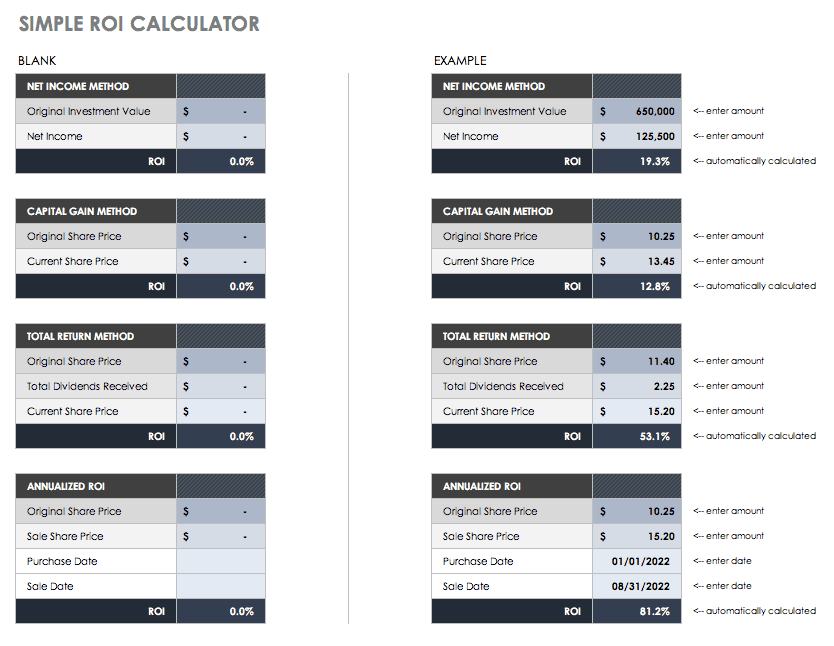
Building a business case for AI PDF redaction requires concrete metrics that translate technical capabilities into financial impact. Enterprises need a structured framework to demonstrate value beyond simple time savings, capturing the full spectrum of benefits from risk reduction to compliance cost avoidance.
Start with these critical KPIs: Time Savings Metrics track document processing speed improvements (typically 60-80% reduction in manual processing time), while Cost Avoidance Metrics measure prevented data breach incidents and avoided regulatory fines. According to 5 Proven ROI Metrics for Measuring Document Automation Value, the most important metrics include time savings, reduced drafting and review cycles, lower labor and external legal costs, and fewer compliance errors.
Calculate your baseline costs first. Manual document redaction typically costs $12-$30 per document when factoring in labor, error correction, and legal review. As detailed by Invoice Processing Automation: 2025 ROI Formula Guide, automation eliminates 60-80% of these costs while reducing audit preparation time by 40-60 hours annually.
For enterprises exploring advanced solutions, Redact PDF delivers measurable ROI through automated compliance tracking and real-time audit trails. The platform's AI-driven approach provides cost-benefit transparency that satisfies CFO-level scrutiny. Compare this with alternatives like Adobe Acrobat, which offers PDF management but requires manual configuration for compliance workflows.
Use this formula: ROI = (Total Benefits – Total Costs) / Total Costs × 100, as outlined in Calculate Your Automation ROI: Free Tool. Track risk reduction separately—The ROI of Real-Time Compliance shows companies investing in real-time compliance monitoring reduce financial risks while strengthening customer trust.
Challenge #5: Change Management and User Adoption Across Enterprise Teams

While technology drives AI redaction capabilities forward, the human element often determines success or failure. According to AI in Organizational Change Management research, successful AI integration hinges on robust change management, requiring executive sponsorship, clear objectives, and addressing the human element through communication and upskilling.
The resistance typically manifests in three ways:
- Legal teams worry AI will replace their judgment rather than enhance it
- Compliance officers question whether automated systems can match their domain expertise
- Operational staff feel overwhelmed by learning new workflows alongside existing responsibilities
The 2025 Legal Technology and AI Adoption Report emphasizes that organizations must proactively address resistance by involving staff in decision-making and communicating the technology's value. Think of it like introducing a new team member—you wouldn't just drop them into projects without proper introductions and training.
Practical adoption strategies include:
- Pilot programs with early adopters who champion the technology
- Role-specific training that shows how AI redaction solves their daily pain points
- Clear metrics demonstrating time saved and accuracy improvements
- Continuous feedback loops that allow teams to shape the tool's evolution
According to 8 AI Implementation Challenges for Law Firms, most legal staff lack training in AI tools, making comprehensive onboarding essential. Success requires treating AI adoption as a holistic transformation, not just a technology deployment—it's a journey that reshapes how teams collaborate and deliver value.
Solution #5: Comprehensive Training Programs and Stakeholder Engagement
Successfully scaling AI PDF redaction requires more than just technology—it demands a strategic approach to change management that transforms skeptics into champions. According to MIT Sloan research, organizations implementing multidimensional value measurement frameworks are 2.3 times more likely to sustain executive support for AI initiatives compared to those relying solely on traditional ROI calculations.
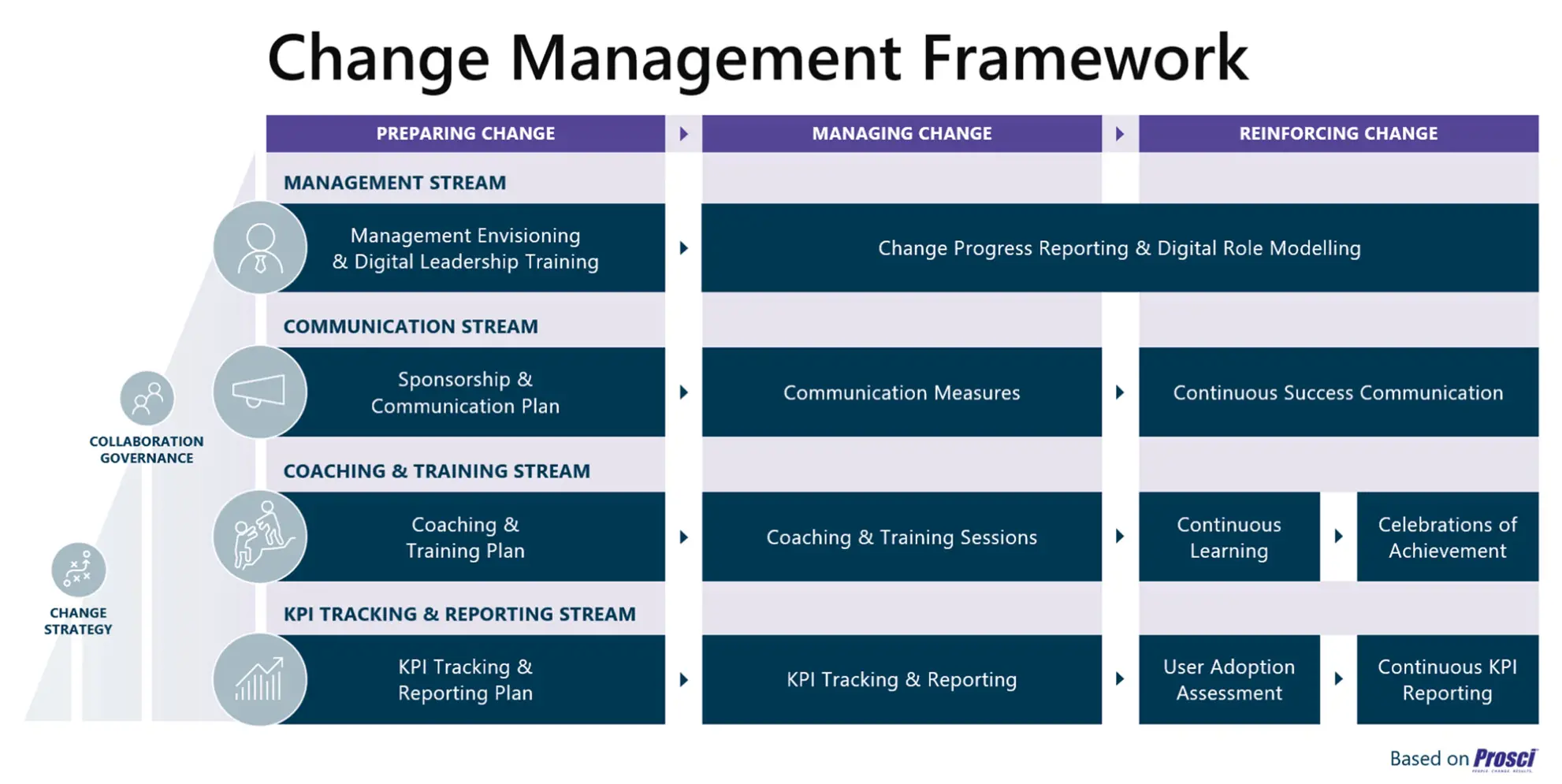
Creating a Tiered Training Architecture
Start by developing a comprehensive training program with distinct tiers focused on fundamentals, practical approaches, and advanced solutions, as Seattle's AI Plan demonstrates. Your program should include:
- Executive briefings that communicate business value and ROI metrics
- Hands-on workshops for daily users covering redaction workflows and quality assurance
- Technical deep-dives for IT teams managing system integration and security
- Compliance training ensuring legal and privacy teams understand AI capabilities and limitations
Building Internal Champions
Identify early adopters across departments who can become redaction champions. These advocates should receive advanced training and serve as first-line support for their teams, significantly reducing support burden through peer-to-peer knowledge transfer. Leverage tools like Adobe Acrobat Studio which combines AI-powered insights with intuitive PDF management, making it easier for champions to demonstrate value and train others effectively.
Measuring Adoption Success
Track engagement through sentiment analysis and usage metrics, identifying common themes in feedback and adjusting your approach accordingly. Regular stakeholder engagement through the AI Center of Excellence ensures continuous alignment between technical capabilities and business needs.
Top 5 Challenges and Solutions in Scaling AI PDF Redaction for Enterprises in 2025
Picture this: Your legal team just received 50,000 documents for a compliance audit due in two weeks. Every page potentially contains Social Security numbers, medical records, and financial data that must be perfectly redacted before submission. Miss one piece of information, and you're facing six-figure GDPR penalties. Over-redact, and the documents become useless for legal proceedings.
This isn't a hypothetical nightmare—it's the daily reality for enterprises in 2025. With AI adoption reaching 78% across organizations and data privacy regulations tightening globally, the pressure to scale document redaction has never been higher. Yet most companies are discovering that simply throwing AI at the problem creates entirely new challenges: accuracy concerns, integration headaches, performance bottlenecks, budget battles, and resistance from the very teams who need these tools most.
The good news? Forward-thinking organizations have already solved these problems. They're processing thousands of documents daily with 95-99% accuracy, cutting costs by 30%, and transforming skeptical legal teams into AI champions. This guide reveals exactly how they did it—and how you can too.
Real-World Success Stories: Enterprises That Scaled AI Redaction Successfully
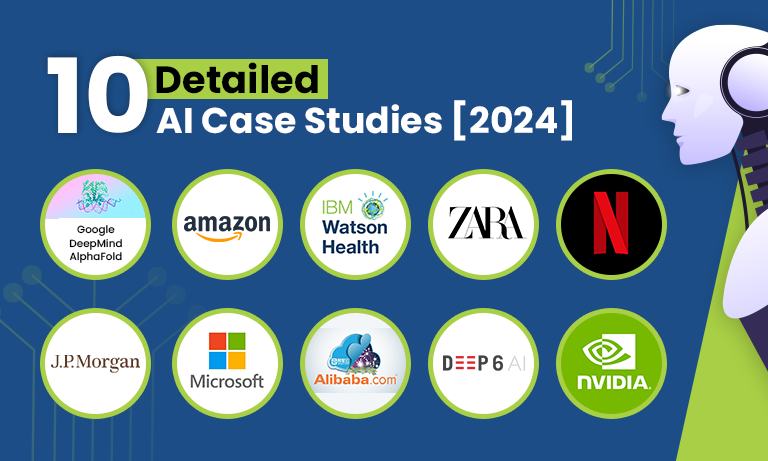
While comprehensive case studies specifically focused on AI redaction remain limited in public discourse, the broader landscape of enterprise AI adoption reveals compelling patterns that illuminate the path forward for document redaction implementations.
Financial Services and Healthcare Lead the Way
Healthcare organizations implementing AI-powered documentation solutions achieved remarkable results, with one system saving physicians 15,791 hours of documentation time annually—a 20% reduction in processing time and 30% decrease in after-hours work. These metrics directly parallel what enterprises are achieving with scaled AI redaction, where automated workflows eliminate manual document review bottlenecks.
For organizations ready to implement similar solutions, Adobe Acrobat Studio offers a comprehensive PDF management platform enhanced with AI capabilities. Its integration of Adobe Express tools enables teams to handle redaction at scale while maintaining the trusted editing and collaboration features enterprises require. The platform's unified approach means teams can manage everything from initial document creation through final redaction in one ecosystem—eliminating the inefficiencies of switching between multiple tools.
Legal Sector Transformation
Legal departments reported significant efficiency gains, with 61% noting "somewhat" increased efficiency and 21% experiencing significant improvements. Larger firms (51+ lawyers) achieved 39% AI adoption rates—nearly double that of smaller practices. One corporate legal team member captured the sentiment perfectly: "I'm excited for the time when AI will allow me to concentrate more on enterprise-level thinking by taking some of the more rote aspects out of the job."
Key Lessons from Early Adopters
Successful implementations share common threads. Organizations like Google encourage teams to solve their own problems with AI tools, while establishing clear governance frameworks and usage guidelines. The most effective approach? Start with pilot programs in controlled environments, measure concrete metrics like time-to-redaction and accuracy rates, then scale systematically based on proven results.
Implementation Roadmap: Your 90-Day Plan to Scale AI Redaction
Scaling AI redaction from pilot to production doesn't happen overnight—but with a structured approach, you can achieve meaningful results within 90 days. Based on proven enterprise AI implementation frameworks, here's your actionable roadmap.
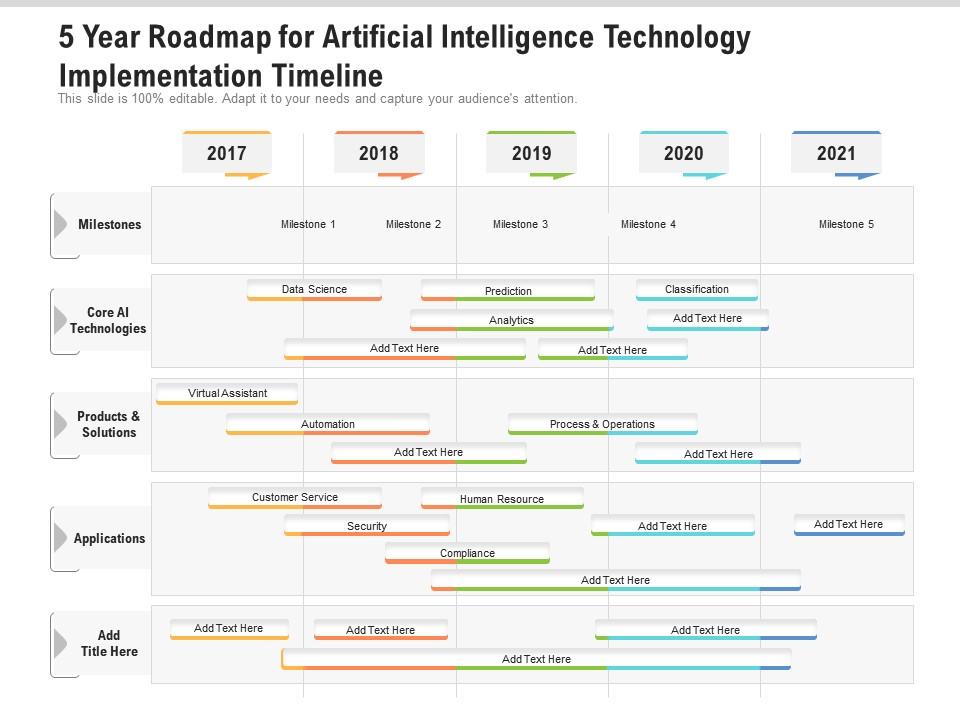
Days 1-30: Assessment and Foundation
Start with a thorough data quality audit—according to industry analysis, 99% of AI projects encounter data quality issues, costing organizations $12.9 million annually. Evaluate your document repositories, security requirements, and compliance standards. Simultaneously, begin vendor selection using a comprehensive evaluation checklist that covers technical capabilities, integration requirements, and total cost of ownership.
For organizations seeking a robust solution, Redact PDF offers enterprise-grade AI redaction capabilities with seamless integration into existing workflows. Unlike traditional tools, it combines automated document processing with intelligent pattern recognition specifically designed for sensitive information handling.
Days 31-60: Pilot Testing and Training
Launch a controlled pilot with 2-3 high-priority use cases. Research shows that organizations implementing MLOps and data governance early reduce model time-to-production by 40%. Establish version control, reproducible environments, and basic monitoring pipelines. Simultaneously, invest in change management—communicate clearly how AI augments human work rather than replacing it.

Days 61-90: Production Deployment
Scale successful pilots with formalized MLOps capabilities including model registries and automated retraining pipelines. Establish a Center of Excellence to support ongoing operations. Most comprehensive AI roadmaps develop over 2-4 months, making this 90-day sprint your foundation for continuous improvement.
Conclusion: Future-Proofing Your Enterprise with Scalable AI Redaction
The journey from manual document redaction to enterprise-scale AI automation isn't just about adopting new technology—it's about fundamentally transforming how your organization protects sensitive information while accelerating business operations. As we've explored, the five critical challenges of scaling AI PDF redaction—accuracy and compliance, integration complexity, performance bottlenecks, cost management, and user adoption—all have proven solutions that forward-thinking enterprises are implementing today.
The competitive advantage belongs to early adopters. Organizations that embrace Redact PDF and similar AI-powered solutions now are reducing processing times by 60-80%, cutting staffing requirements by up to 70%, and achieving 95-99% accuracy rates that surpass manual review. Looking ahead to 2025-2026, expect to see deeper integration of contextual AI that understands industry-specific terminology, real-time compliance monitoring that prevents violations before they occur, and hybrid deployment models that balance security with performance.
Key Takeaways for Your Scaling Journey:
| Action Item | Expected Outcome | Timeline | |-------------|------------------|----------| | Conduct data quality audit | Foundation for accurate AI training | Week 1-2 | | Launch controlled pilot program | Validate ROI and identify gaps | Week 3-8 | | Establish Center of Excellence | Sustainable long-term operations | Week 9-12 |
Don't wait for a compliance crisis to force your hand. Start your 90-day implementation roadmap today—assess your current redaction workflows, identify high-priority use cases, and select a solution that scales with your needs. The cost of inaction grows daily, but the rewards of early adoption compound over time.
FAQ: Common Questions About Scaling AI PDF Redaction
How accurate are AI PDF redaction tools for enterprise use?
Modern AI-powered redaction solutions consistently achieve 95-99% accuracy rates on well-defined fields—surpassing the 90-95% accuracy of manual human review. According to Best AI redaction APIs: Complete comparison guide for 2025, leading platforms like Nutrient AI redaction API process native PDFs directly with sophisticated PII detection. These systems flag uncertain extractions for human review, creating a hybrid approach that combines machine efficiency with human judgment where needed. For enterprises handling thousands of documents daily, this accuracy translates into fewer compliance risks and reduced manual verification costs.
What security certifications should enterprises require?
Enterprise-grade solutions must provide SOC 2 and GDPR certifications as baseline requirements. How to Compare the Best AI PDF Redaction Tools in 2025 emphasizes that organizations should prioritize tools offering documented audit trails and compliance support from day one. Healthcare providers need HIPAA compliance with metadata removal capabilities, while financial services require permanent deletion verification. Cloud APIs like Azure AI Language and AWS Comprehend typically include these certifications built-in.
How long does enterprise implementation typically take?
Implementation timelines vary by deployment model. Best AI redaction APIs notes that turnkey cloud APIs require just 2-4 weeks for minimal setup, while comprehensive enterprise deployments with custom workflows may extend to 8-12 weeks. Organizations prioritizing speed should consider cloud-first solutions that offer immediate deployment without infrastructure overhead.
What's the real ROI of scaling AI redaction?
Enterprises report processing time reductions from days to hours while cutting staffing requirements by 60-70%. AI Document Processing documents cases where organizations handle identical volumes with one-third the staff after implementation. Cost savings come from reduced manual labor, fewer compliance violations, and faster document turnaround times that directly impact business velocity.