How to Redact Sensitive Data from PDFs Using Generative AI
How to Redact Sensitive Data from PDFs Using Generative AI
Last month, a Fortune 500 company accidentally exposed thousands of employee Social Security numbers in what they thought were properly redacted HR documents. The culprit? Someone used a black highlighter tool that merely covered the data—it didn't actually remove it. This isn't an isolated incident. With 95% of data breaches linked to human error, organizations are desperately seeking foolproof ways to protect sensitive information in their documents. Enter AI-powered redaction: a technology that's transforming document security by automatically detecting and permanently removing confidential data from PDFs in minutes. If you've ever spent hours manually blacking out names, phone numbers, or financial details—or worse, worried you missed something critical—this guide will show you how generative AI can eliminate both the tedium and the risk, keeping your organization compliant with GDPR, HIPAA, and other regulations while saving countless hours of manual work.
Why Traditional PDF Redaction Methods Fall Short
When a single overlooked name or Social Security number can trigger a data breach affecting millions, the stakes for proper document redaction have never been higher. Yet 95% of data breaches in 2024 were linked to human error, with poorly redacted files among the top culprits. Traditional redaction methods—whether manual black markers or basic PDF tools—simply can't keep pace with today's security demands.
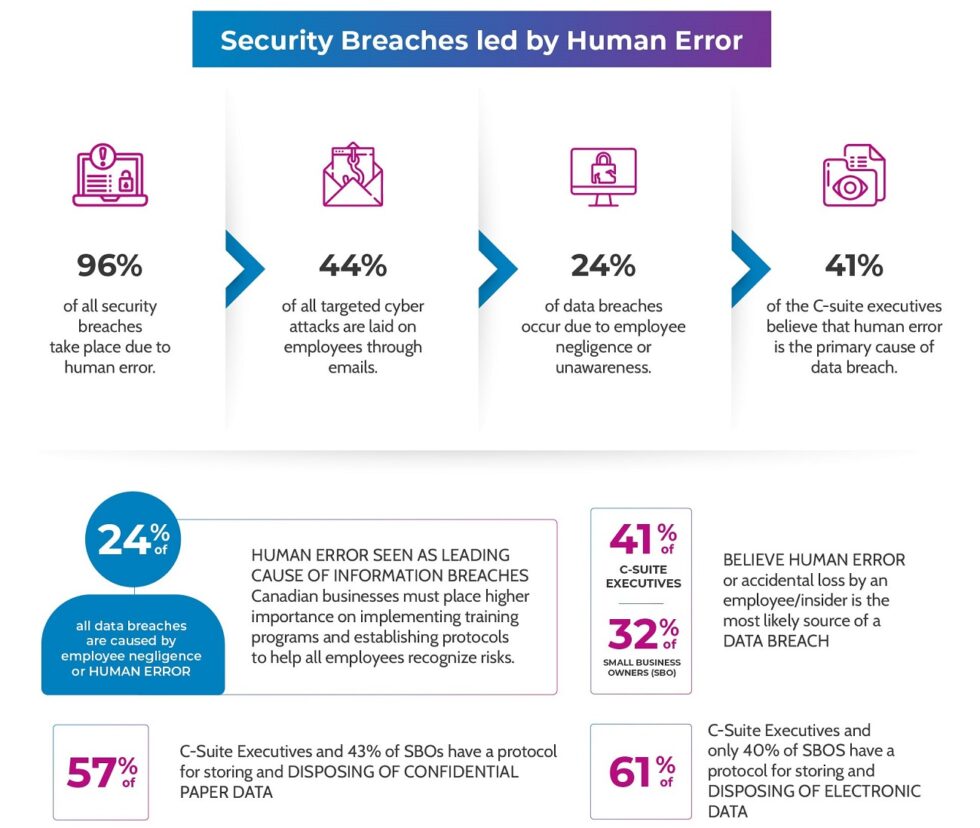
The Human Error Problem
Manual redaction is exhausting, meticulous work. A legal team member reviewing hundreds of discovery documents might accidentally miss a client name buried in a footnote. An HR professional redacting employee files could overlook metadata containing salary information. According to Adobe redaction limitations, even experienced professionals struggle with the manual, repetitive nature of the process—and one missed detail can expose an entire organization to liability.
Time and Scalability Constraints
Manual redaction takes hours for just a few documents, making it virtually impossible to handle large-scale projects. When organizations need to redact thousands of pages for compliance audits or legal proceedings, traditional desktop tools cannot handle the volume efficiently. This creates backlogs, delays critical decisions, and increases the window of vulnerability for sensitive information exposure.
How Generative AI Transforms PDF Redaction
Traditional PDF redaction feels like playing a high-stakes game of Where's Waldo—except instead of finding a quirky character, you're hunting for every instance of sensitive data scattered across hundreds of pages. Miss one social security number or patient record, and you've got a compliance nightmare on your hands.
Enter AI-powered redaction, which completely reimagines this process. According to research published in ArXiv, advanced machine learning algorithms can swiftly and accurately identify sensitive information within documents—from personal data and financial details to classified information—and redact it automatically, significantly reducing the risk of human error.
Here's how the technology works its magic: AI redaction tools leverage natural language processing (NLP) and machine learning to recognize patterns across different data types. As Accusoft explains, these systems automatically detect Personally Identifiable Information (PII), Protected Health Information (PHI), and financial data without requiring manual page-by-page review. The AI doesn't just look for obvious identifiers like social security numbers—it can also infer identities through behavioral patterns, geolocation data, and unstructured text.
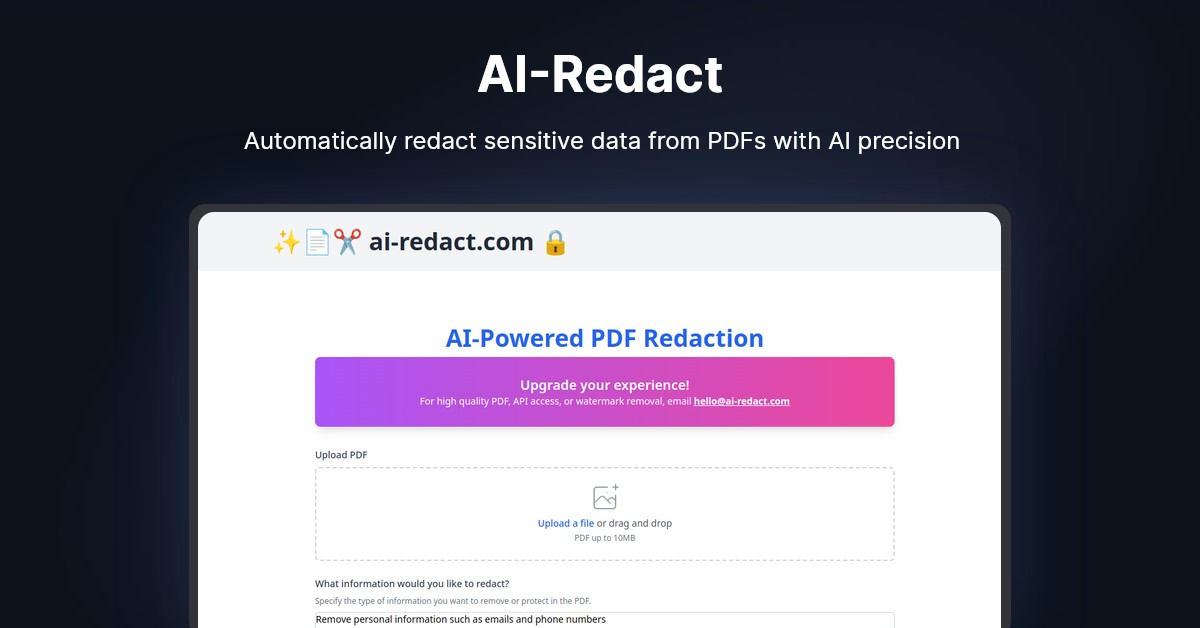
The advantages over traditional methods are substantial. While manual redaction can expose up to 20% of sensitive data due to human oversight, AI-powered solutions like Redact-PDF.ai combine speed with precision, automatically detecting names, emails, phone numbers, and more while maintaining GDPR and HIPAA compliance. The result? Research shows that AI redaction significantly outperforms manual methods in both accuracy and completion times—transforming what once took hours into a task completed in minutes.
Sources consulted:
- ArXiv research on AI redaction
- Accusoft legal data management insights
- ResearchGate study on smart document redaction
- Redact-PDF.ai solution overview
Step-by-Step Guide: Redacting PDFs with AI Tools
Ready to protect sensitive information in your documents? Here's how to redact PDFs using AI-powered tools in minutes. The process is surprisingly straightforward, even if you've never redacted a document before.

Choose Your AI Redaction Tool
Start by selecting an AI-powered redaction platform that fits your needs. For quick, one-off redactions, Redact-PDF.ai offers free processing for up to 4 pages with encrypted uploads and automatic file deletion. If you're handling larger volumes, consider tools with bulk processing capabilities that can redact multiple documents simultaneously.
Upload and Configure Settings
Once you've chosen your tool, upload your PDF and select what needs redacting—names, email addresses, phone numbers, or custom patterns. Most AI redaction solutions use advanced pattern recognition to automatically identify sensitive data. Simply click "Perform AI Text Analysis," choose your document's language, and let the AI scan for confidential information.
Review AI Suggestions
Here's where AI saves you hours of manual work. The system highlights detected sensitive data, allowing you to review each suggestion before applying redactions. Think of it as having a meticulous assistant who catches what you might miss. You can accept all suggestions or selectively choose which items to redact.
Finalize and Download
After confirming your selections, apply the redactions permanently. The AI processes your document, replacing sensitive information with solid black boxes that can't be reversed. Download your securely redacted PDF, knowing that your data remains encrypted throughout the process and files are automatically deleted after completion—ensuring GDPR and HIPAA compliance.
Top AI-Powered PDF Redaction Solutions in 2025
Choosing the right AI redaction tool can make the difference between hours of manual work and minutes of automated protection. The market offers diverse solutions ranging from enterprise-grade platforms to accessible free tools, each designed for specific workflows and compliance requirements.
Redact-PDF.ai stands out as the most accessible entry point for individuals and small teams needing secure, compliant redaction. This free solution leverages advanced machine learning to automatically detect and permanently remove sensitive information like names, emails, and phone numbers across multiple languages. What sets it apart is its generous free tier—up to 4 pages with zero cost—and transparent pricing for larger volumes. The platform ensures GDPR and HIPAA compliance through encrypted uploads, automatic file deletion after processing, and permanent data removal rather than visual masking.
For organizations handling mixed-media compliance needs, Secure Redact offers unified redaction across PDFs, video, and audio files—ideal for legal teams managing discovery materials. Meanwhile, Nutrient AI Redaction API provides enterprise-grade integration capabilities with SOC 2 certification, processing native PDFs directly with 2-4 week deployment timelines.
Budget-conscious teams should consider PDFelement Pro for cost-effective redaction with strong OCR capabilities, while Adobe Acrobat Pro DC remains the gold standard for organizations needing comprehensive PDF management beyond redaction alone.
The best choice depends on your volume, budget, and compliance requirements—but for most users starting their redaction journey, Redact-PDF.ai offers the perfect balance of capability, security, and accessibility without upfront investment.
Industry Applications and Real-World Success Stories

AI-powered redaction is transforming how organizations protect sensitive data across multiple sectors, delivering measurable improvements in efficiency, accuracy, and compliance. Small law firms implementing AI redaction tools are experiencing a "productivity multiplier effect," redirecting partner time from administrative tasks to billable work while delivering faster turnarounds on routine matters and more detailed research on complex issues.
In healthcare, organizations are turning to specialized solutions to meet strict HIPAA compliance requirements. Healthcare payers using AI for regulatory compliance are saving hundreds of millions in administrative costs while reducing the significant financial risk of non-compliance. For organizations seeking a reliable solution, Redact-PDF.ai offers GDPR and HIPAA-compliant redaction with encrypted uploads, automatic file deletion, and multilingual support—perfect for healthcare providers who need to securely remove PHI from medical records and insurance claims.
The financial and government sectors are also seeing breakthrough results. Research on regulatory-compliant explainable AI demonstrates both successes and challenges of implementing AI redaction in these domains. Key success metrics include 70-80% reduction in redaction time, 95%+ accuracy rates in identifying sensitive data, and dramatically lower compliance violation risks. Organizations report that AI redaction tools enable consistent client communication and scalable operations without proportional increases in overhead.
Best Practices for AI-Assisted Redaction
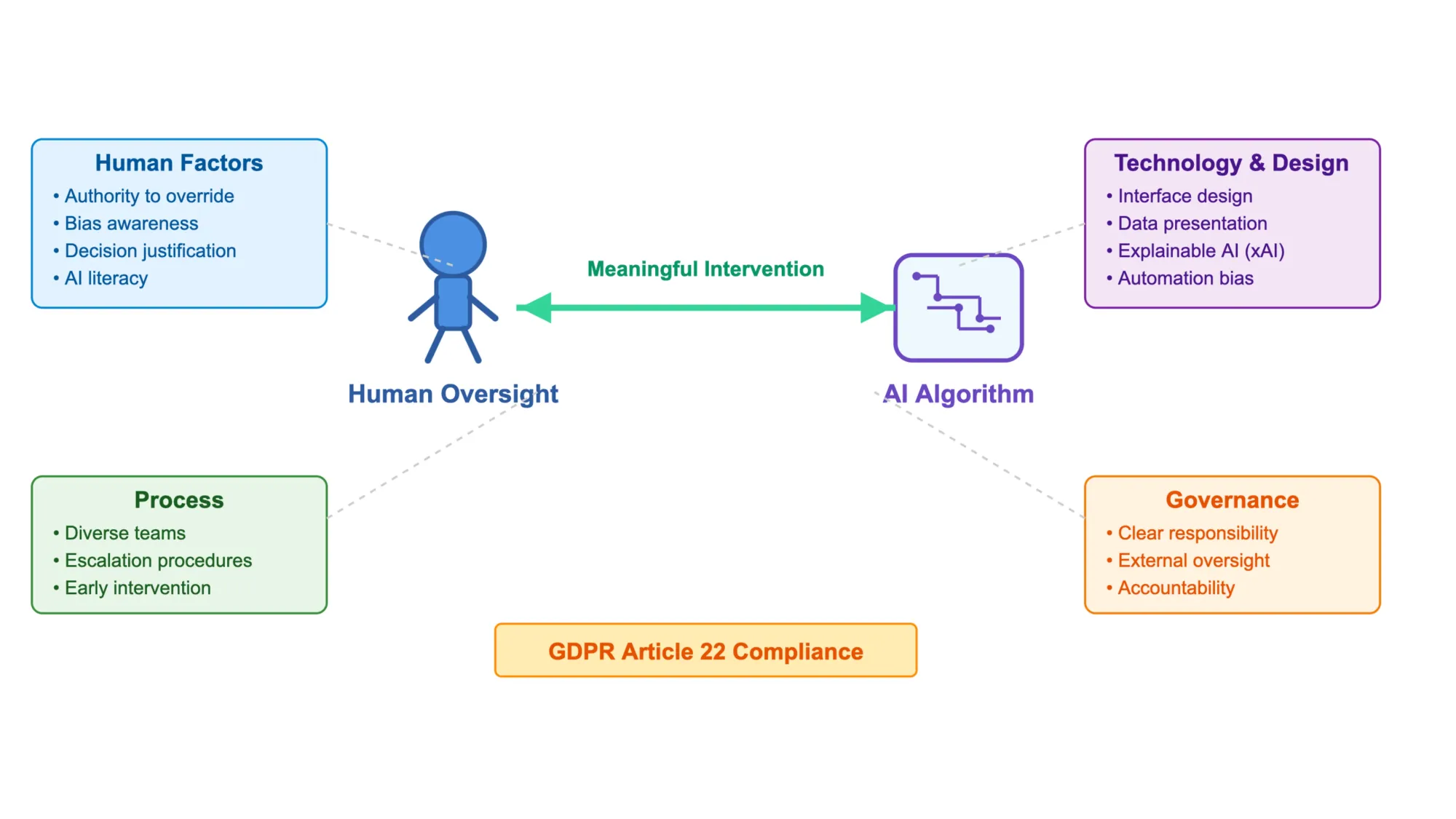
While AI-powered tools dramatically improve redaction efficiency, success depends on implementing smart protocols and avoiding common pitfalls. The most critical practice? Never trust automation blindly. According to AI Powered Redaction: Safeguarding Privacy & Compliance, AI tools must provide audit trails that document every redaction decision—because regulators care as much about your process as your results.
Essential Verification Steps:
- Always conduct manual spot-checks on AI-redacted documents, especially for high-stakes materials
- Verify that redaction permanently removes data rather than just visually obscuring it, as Redacting Sensitive Data in PDFs: What Most People Get Wrong warns about this fundamental mistake
- Check metadata, hidden layers, and embedded content—these are where most redaction failures occur
For compliance-focused workflows, The Intersection of GDPR and AI and 6 Compliance Best Practices recommends conducting Data Protection Impact Assessments (DPIAs) for AI systems handling high-risk processes. Tools like Redact-PDF.ai address these concerns directly with encrypted uploads, automatic file deletion after processing, and GDPR/HIPAA compliance built into their infrastructure from the ground up.
Finally, establish clear documentation protocols. According to AI Regulatory Compliance: Why Keeping Tabs on HIPAA & GDPR, real compliance means building trust through transparent practices at every level—which means maintaining detailed records of your redaction processes, AI training data sources, and quality control measures.
Ensuring Compliance and Security in AI Redaction
When using AI to redact sensitive information from PDFs, regulatory compliance isn't optional—it's mandatory. Understanding how AI-powered redaction aligns with major privacy frameworks protects both your organization and the individuals whose data you process.
Key Regulatory Requirements
CCPA compliance in California requires businesses to implement reasonable security measures including encryption, access controls, and proper redaction techniques. Starting in 2025, the California Privacy Protection Agency mandates risk assessments before processing personal information that presents significant privacy risks—which includes automated decision-making and sensitive data handling.
For healthcare organizations, HIPAA's 2025 encryption updates mandate stronger protections for electronic health information. Healthcare entities must encrypt ePHI both at rest and in transit using AES-256 standards, with Hardware Security Modules (HSMs) managing encryption keys throughout their lifecycle. GDPR in Europe and FERPA for educational records impose similar stringent requirements.
Secure File Handling and Audit Trails
Leading AI redaction solutions like Redact-PDF.ai prioritize security through encrypted uploads, automatic file deletion after processing, and zero data retention policies. For legal admissibility, proper redaction must permanently remove information—not just obscure it visually. Organizations should maintain comprehensive audit trails documenting who redacted what information, when, and under which authority.
According to encryption best practices for 2025, combining symmetric and asymmetric encryption with robust key management creates the foundation for legally defensible redaction processes that withstand regulatory scrutiny and legal challenges.
Conclusion: Take Control of Your Sensitive Data Today
The stakes for document security have never been higher, but AI-powered redaction tools have transformed what was once a tedious, error-prone process into something fast, accurate, and accessible. Whether you're a legal professional managing discovery documents, an HR manager protecting employee records, or a healthcare provider securing patient information, modern AI solutions deliver the precision and efficiency traditional methods simply can't match.
Ready to experience the difference? Redact-PDF.ai offers a risk-free way to start—redact up to 4 pages completely free with encrypted uploads, automatic file deletion, and full GDPR and HIPAA compliance. No complicated software to install, no learning curve to navigate. Just upload your PDF, let the AI identify sensitive information across multiple languages, and download your securely redacted document in minutes.
| Method | Time per Document | Accuracy Rate | Compliance Built-in | Cost for Small Jobs | |--------|------------------|---------------|---------------------|---------------------| | Manual Redaction | 2-4 hours | 80% (human error risk) | Depends on process | Staff time only | | Traditional Software | 30-60 minutes | 85-90% | Manual verification needed | License fees apply | | AI-Powered Tools | 2-5 minutes | 95%+ | GDPR/HIPAA compliant | Free tier available |
Don't let another document leave your organization with sensitive data exposed. Start your first AI-powered redaction today and join thousands of professionals who've already made the switch to faster, safer document handling.